EXPLORE    FEATURES   
EXPLORE    FEATURES     
Feature Lists

Every Country's Top Tourist Attraction - According to Tripadvisor
Planning your next getaway? We've tapped into Tripadvisor's massive trove of real traveler reviews and ratings to spotlight the single most popular attraction in every country on Earth. From ancient wonders to natural marvels, these standout spots represent the very best each destination has to offer—according to the people who've actually been there.
Africa
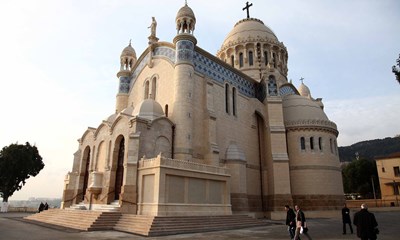
The goal involves visiting Notre Dame d’Afrique, a prominent Catholic basilica perched on a hill overlooking the Bay of Algiers. Visitors can explore its distinctive white stone architecture, ornate interior, and the panoramic views of the Mediterranean and the surrounding city. The site also offers a quiet setting for reflection and an opportunity to learn about its historical role in the region.
Notre Dame d'Afrique is a stunning basilica with panoramic views of Algiers and the Mediterranean.
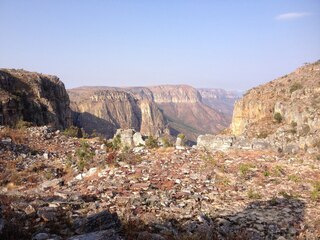
Tundavala is a high escarpment and viewpoint located near Lubango in southern Angola. It overlooks a wide valley with steep cliffs dropping several hundred meters to the plains below. The site features exposed rock formations and offers clear views across the surrounding landscape. It is accessible by road and is used as a local lookout point.
Tundavala offers breathtaking views of the vast and rugged landscape of Angola's Huila province.
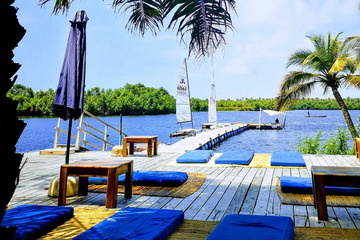
Bab's Dock in Benin offers a serene escape with its picturesque lagoon setting and lush surroundings. Visitors can enjoy a variety of activities such as kayaking through tranquil waters, exploring the rich biodiversity of the mangroves, or simply relaxing on the sandy shores. The dock also provides opportunities for bird watching and savoring local cuisine at the on-site restaurant, making it an ideal spot for both adventure and relaxation.
Bab's Dock in Benin offers serene mangrove boat rides, perfect for spotting diverse bird species.
The Okavango Delta in Botswana is a must-visit destination for any nature lover or adventure seeker. This UNESCO World Heritage Site offers a unique opportunity to explore the diverse landscapes of the delta, from vast floodplains to lush grasslands. Visitors can enjoy activities such as game drives, mokoro safaris, bird watching, and cultural experiences with local communities. With its abundance of wildlife and stunning scenery, the Okavango Delta promises an unforgettable travel experience.
The Okavango Delta is the largest inland delta in the world, covering over 15,000 square kilometers.
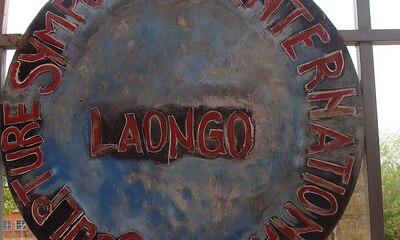
The Laongo Sculpture Symposium in Burkina Faso offers an intriguing blend of art and nature, where visitors can explore an open-air museum featuring an impressive array of granite sculptures crafted by artists from around the world. This unique site provides an opportunity to witness the creative process during live sculpting events and to engage with artists through workshops and discussions. Additionally, the surrounding landscape invites exploration, with pathways that guide visitors through the artistic creations while enjoying the natural beauty of the area.
At the Laongo Sculpture Symposium, artists carve intricate granite sculptures directly into the natural landscape.
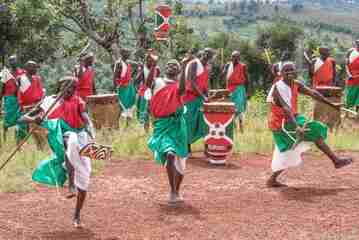
The Gishora Drum Sanctuary in Burundi offers a fascinating glimpse into the country's rich cultural heritage. Visitors can experience the powerful rhythms of traditional drumming performances, which have been recognized by UNESCO as an Intangible Cultural Heritage of Humanity. The site also provides an opportunity to explore the historical significance of the drums and their role in Burundian society. Additionally, tourists can enjoy guided tours of the sanctuary, learn about the craftsmanship behind drum-making, and even try their hand at playing these iconic instruments.
At Gishora Drum Sanctuary, visitors can witness traditional Burundian drumming, a UNESCO Cultural Heritage.
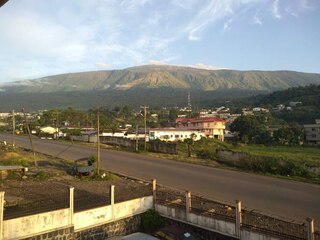
Mount Cameroon, an imposing volcanic peak in West Africa, offers an exhilarating destination for adventure enthusiasts and nature lovers alike. Standing as one of Africa's highest mountains, it provides a challenging yet rewarding trek through diverse landscapes, from lush rainforests to barren volcanic craters. Visitors can explore the surrounding national park, rich with unique flora and fauna, and experience the local culture in nearby towns. Whether it's hiking to the summit, observing wildlife, or immersing in the region's traditions, Mount Cameroon promises an unforgettable journey.
Mount Cameroon is one of Africa's most active volcanoes, with the last eruption in 2012.
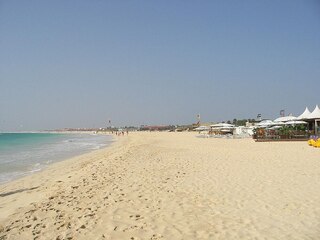
Praia de Santa Maria, located on the southern coast of Sal Island in Cape Verde, is a stunning beach destination known for its golden sands and crystal-clear waters. Visitors can indulge in a variety of activities, such as windsurfing, kite surfing, or simply relaxing under the sun. The town offers a lively atmosphere with its local markets, charming restaurants, and the iconic Santa Maria Pier, where one can watch fishermen bring in their daily catch. Whether you're interested in water sports, exploring local culture, or just soaking up the sun, Praia de Santa Maria provides an unforgettable experience.
Praia de Santa Maria's vibrant pier hosts daily fish auctions, offering a glimpse into local culture.
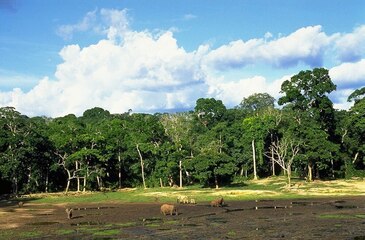
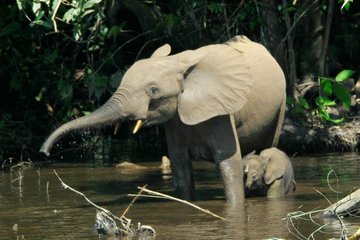
The Dzanga-Sangha Reserve in the Central African Republic is a remarkable protected area that offers a unique opportunity to explore the rich biodiversity of the Congo Basin. Visitors can experience the thrill of tracking forest elephants and lowland gorillas, while also having the chance to engage with the local Ba'Aka people and learn about their traditional way of life. The reserve's lush rainforests and diverse ecosystems provide a stunning backdrop for activities such as guided nature walks, bird watching, and river excursions, making it an ideal destination for nature enthusiasts and adventure seekers alike.
Dzanga-Sangha Reserve is home to the elusive bongo antelope, best spotted during dawn safaris.
ALSO ON DAY ZERO...
Get inspired with these ideas for interesting and different experiences around the world.
Take your goal setting to the next level with a whole set of exclusive features that will empower you to achieve more.
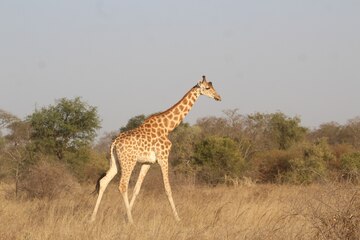
Zakouma National Park in Chad is a remarkable wildlife sanctuary that offers a unique glimpse into Africa's rich biodiversity. Visitors can experience thrilling safari adventures, observing diverse species such as elephants, giraffes, and lions in their natural habitat. The park also provides opportunities for bird watching, with over 300 bird species, and guided walking tours that allow for an intimate exploration of its stunning landscapes. Whether you're exploring the vast savannahs or enjoying a peaceful boat ride on the Bahr Salamat, Zakouma offers an unforgettable experience for nature enthusiasts.
Zakouma National Park is renowned for its successful elephant conservation, hosting over 500 elephants.
Mount Karthala is an active shield volcano and the highest point in the Comoros, rising to 2,361 meters on the island of Grande Comore. Its broad summit caldera measures roughly three kilometers across and has been the site of multiple eruptions in recent decades. The mountain’s upper slopes consist of barren lava fields, while lower elevations support dense forest cover. Access typically involves multi-day treks from nearby villages, with routes passing through changing vegetation zones and offering views of the surrounding Indian Ocean.
Mount Karthala is an active shield volcano and the highest point in the Comoros archipelago at 2,361 meters.
The Pyramids at Giza, one of the most iconic landmarks in Egypt, offer a glimpse into ancient civilization and its architectural marvels. Visitors can explore the Great Pyramid of Khufu, the Pyramid of Khafre, and the Pyramid of Menkaure, along with the enigmatic Sphinx. A visit to the Solar Boat Museum reveals a reconstructed ancient vessel, while camel rides around the pyramids provide a unique perspective of the site. The sound and light show in the evening brings the history of these ancient wonders to life.
The Great Pyramid of Giza is the oldest of the Seven Wonders of the Ancient World and is the only one still standing today.
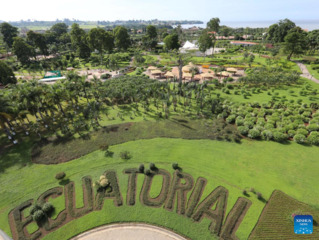
Malabo National Park is a protected area near the capital of Equatorial Guinea that preserves tropical rainforest and coastal habitats. It offers basic trails and wildlife viewing for visitors interested in the region's natural environment.
Visitors may spot endangered drill monkeys and several species of hornbills.
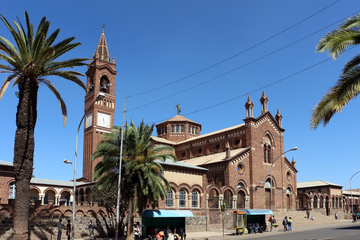
The Cathedral of Our Lady of the Rosary is a Roman Catholic cathedral located in Asmara, Eritrea. Constructed in the early twentieth century during the Italian colonial period, the building features a basilica plan with a prominent dome and twin bell towers. The interior contains marble altars, stained glass windows, and religious frescoes. It serves as the seat of the Eparchy of Asmara and remains an active place of worship for the local Catholic community.
This 19th-century cathedral was built by Italian colonial engineers using local stone.
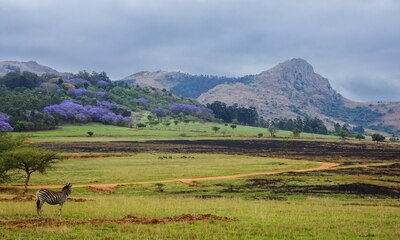
Mantenga Nature Reserve is a protected area in Eswatini that preserves a section of Swazi cultural landscape alongside indigenous woodland and grassland habitats. The reserve includes the Mantenga Falls, walking trails through native vegetation, and a reconstructed traditional Swazi homestead that demonstrates historical settlement patterns and craft practices. It is located near the Ezulwini Valley and provides access to geological features and local biodiversity within a compact area.
Three waterfalls drop over cliffs within the reserve boundaries.
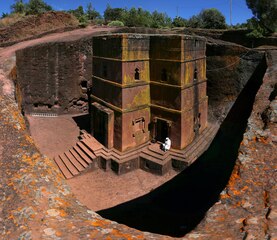
The Rock-Hewn Churches of Lalibela are a group of eleven medieval churches in northern Ethiopia, carved directly from solid volcanic rock in the late twelfth and early thirteenth centuries. Each structure was excavated downward from a single block of stone, with interior spaces, pillars, windows, and decorative details all cut from the same mass. The site includes both free-standing and cave-like churches connected by tunnels and trenches, some of which remain in active religious use. The churches are recognized for their scale, engineering, and the preservation of their original rock-cut forms.
Each church connects to others through tunnels carved into the rock.
The Lopé-Okanda Reserve near La Lopé in Gabon covers a mix of dense rainforest and savanna that together support forest elephants, western lowland gorillas, chimpanzees, and numerous bird species. The landscape includes rolling hills, river valleys, and open clearings where animals can be observed from vehicles or on foot. Rock engravings and archaeological sites within the reserve provide evidence of human presence dating back tens of thousands of years. Access is mainly by road from Libreville, with basic lodges and guided tours available inside the protected area.
The Lopé-Okanda Reserve spans over 5,000 square kilometers and is a UNESCO World Heritage Site since 2007.
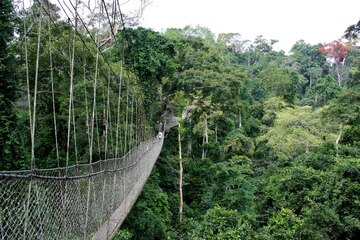
Kakum National Park covers 375 square kilometers of tropical moist forest in Ghana’s Central Region. It protects a range of plant and animal species, including forest elephants, seven species of primates, and over 300 bird species. A 350-meter canopy walkway suspended 30 meters above the forest floor provides elevated access for observation and research. The park is managed by the Ghana Forestry Commission and serves both conservation and limited tourism purposes.
Kakum's canopy walkway was built in 1995 as Africa's first of its kind.
Iles de Los is an archipelago of small islands located a short distance off the coast of Guinea near Conakry. The islands feature sandy beaches, rocky shores, and low hills covered in vegetation. They are accessible by boat from the mainland and are used for day trips, fishing, and limited overnight stays. The area has a mix of local communities and some basic tourist facilities.
Many residents speak French, Susu, and some English.
The Maasai Mara National Reserve is a protected wildlife area in southwestern Kenya, bordering Tanzania’s Serengeti National Park. It consists mainly of open savanna grassland with scattered acacia trees and is crossed by the Mara River. The reserve supports large populations of plains game and their predators, and it is one of the locations where the annual wildebeest migration can be observed between July and October. Management is shared between the Kenya Wildlife Service and local Maasai communities, who retain certain land-use rights within the reserve’s boundaries.
The Great Migration sees over a million wildebeest cross the Mara River each year.
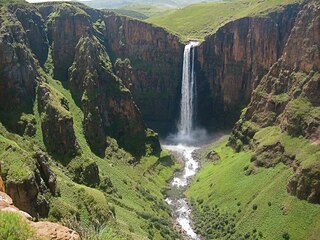
Maletsunyane Falls is a single-drop waterfall in the Maluti Mountains of Lesotho, plunging approximately 192 meters into a gorge carved by the Maletsunyane River. The site lies near the town of Semonkong and can be reached by road or on horseback from local lodges. Visitors typically view the falls from a fenced overlook or descend steep trails to the base, where mist and spray are common. The surrounding highland terrain consists of open grassland and basaltic cliffs, with limited facilities beyond basic viewpoints and informal guiding services.
Maletsunyane Falls drops 192 meters into a deep gorge.
Sapo National Park is a large protected area of tropical rainforest in southeastern Liberia. It contains primary forest with high tree canopies, numerous rivers, and a variety of habitats ranging from lowland forest to swamp areas. The park supports populations of forest elephants, pygmy hippopotamuses, chimpanzees, and several primate species, along with diverse birdlife. Established in the early 1980s, it remains one of the few sizable rainforest reserves in the country and is used for ecological research and limited tourism.
Over 125 mammal species have been recorded inside the park boundaries.
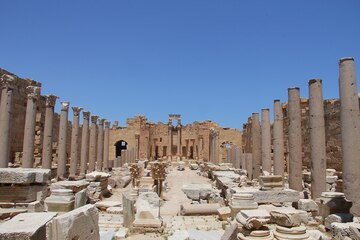
Leptis Magna is an extensive Roman archaeological site located on the Mediterranean coast of Libya, near the modern city of Khoms. The ruins include a well-preserved theater, basilica, forum, market, and harbor structures, reflecting the city’s development from a Phoenician trading post through its peak under Roman rule in the 2nd and 3rd centuries CE. Many of the stone buildings and monuments remain largely intact due to burial under sand for centuries, which protected them from later reuse. The site is recognized as a UNESCO World Heritage property and provides direct evidence of urban planning, trade networks, and architectural practices in the Roman provinces of North Africa.
Leptis Magna was founded by Phoenicians around 1100 BC as a trading post.
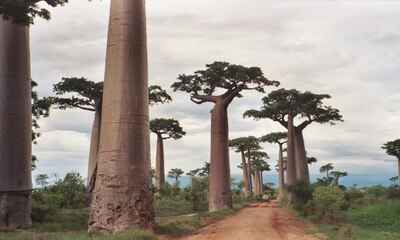
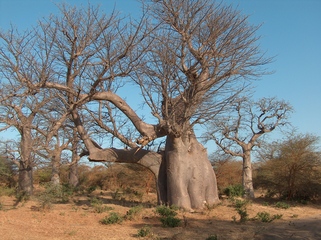
The Avenue of the Baobabs is a dirt road lined with tall, ancient baobab trees in western Madagascar. The trees, some several hundred years old, stand along both sides of the route between Morondava and Belo sur Tsiribihina. The site is popular for photography, especially at sunrise and sunset, and is easily accessible by road from nearby towns.
The avenue contains about 20 trees lining a 260 meter dirt road.
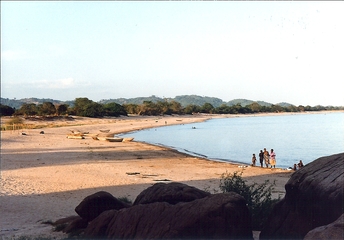
Lake Malawi is a large freshwater lake in southeastern Africa, bordered by Malawi, Mozambique, and Tanzania. It is one of the deepest lakes in the world and contains hundreds of species of fish found nowhere else, making it a notable site for biodiversity. The lake supports local fishing communities and attracts visitors interested in snorkeling, diving, and observing wildlife along its shores.
Lake Malawi, also known as Lake Nyasa, is the third-largest African Great Lake and ninth-deepest globally.
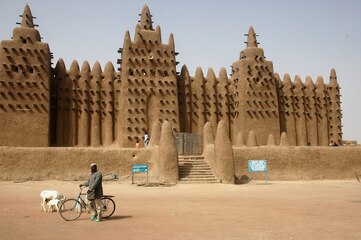
The Great Mosque of Djenné is a large mud-brick mosque located in the town of Djenné, Mali. Built in the Sudano-Sahelian architectural style, it features thick walls, rounded towers, and protruding wooden beams that serve both structural and maintenance purposes. The current structure dates to 1907, though it stands on the site of earlier mosques from the 13th century. It functions as a central place of worship and community gathering, and its distinctive form has made it a notable example of West African Islamic architecture.
Wooden beams protrude from the walls to aid annual maintenance work.
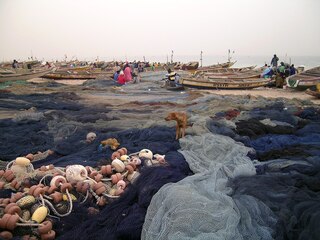
Port de Pêche is the main fishing harbor in Nouakchott, Mauritania, where wooden boats line the beach and fishermen unload their daily catch directly onto the sand. The site functions as both a working port and an informal market, with fish being sorted, sold, and transported by hand amid the activity of boats and vehicles. Visitors can observe the operations of the local fishing industry and the surrounding coastal environment.
The port's ship graveyard features hundreds of rusting wrecks abandoned since the 1980s due to overfishing bans.
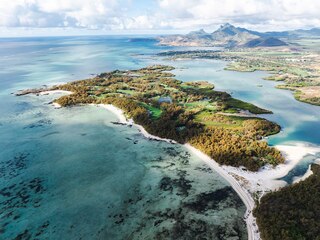
Ile aux Cerfs is a small island located off the east coast of Mauritius, known for its sandy beaches, clear lagoon waters, and surrounding coral reefs. It is accessible by boat from the mainland and features calm swimming areas, basic facilities, and opportunities for water sports such as snorkeling, kayaking, and parasailing. The island is largely undeveloped, with limited infrastructure and natural vegetation covering much of its interior.
Glass-bottom boats let visitors view coral without entering the water.
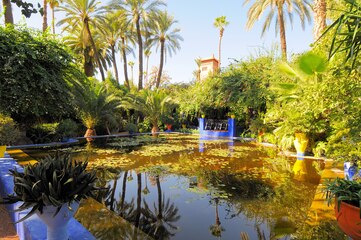
Majorelle Garden is a twelve-acre botanical garden and villa complex in Marrakech, Morocco, originally designed in the 1920s by French painter Jacques Majorelle and later restored by Yves Saint Laurent and Pierre Bergé. The site features an extensive collection of cacti, palms, and exotic plants arranged around bright-blue buildings, water features, and shaded walkways. It also contains the Berber Museum, which displays traditional Moroccan artifacts, textiles, and jewelry. The garden is open to the public and serves as both a landscaped park and a cultural venue.
Majorelle Garden was created in 1923 by French artist Jacques Majorelle.
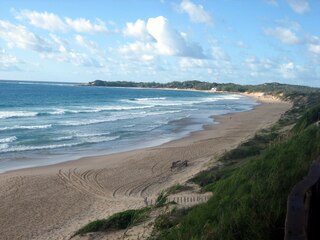
Praia do Tofo is a beach area on the southern coast of Mozambique near the town of Inhambane. It features a long stretch of sand with consistent surf conditions and is a known location for snorkeling and diving, particularly for observing whale sharks and manta rays. The area includes basic tourist infrastructure such as guesthouses, restaurants, and dive operators, and is accessible by road from Inhambane.
Whale sharks visit the area between May and December each year.
Sossusvlei, located in Namibia, is a must-visit destination for any traveler seeking a unique and unforgettable experience. This iconic salt and clay pan is surrounded by towering red sand dunes, some of the highest in the world, making it a photographer's dream. Visitors can climb the famous Dune 45 for breathtaking views, explore the eerie Deadvlei with its ancient, petrified trees, and witness the changing colors of the desert landscape at sunrise and sunset. A trip to Sossusvlei promises to be an adventure like no other.
The sand dunes in Sossusvlei are some of the tallest in the world, reaching over 300 meters.
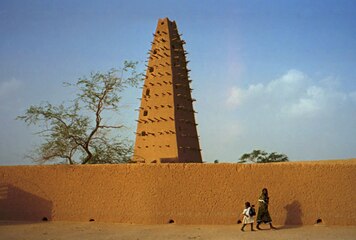
The Grande Mosquée d'Agadez is a 16th-century mud-brick mosque in central Niger, distinguished by its tall, tapering minaret that rises above the surrounding low-rise buildings. Built from local clay and timber using traditional Sudano-Sahelian techniques, the structure features simple geometric patterns and narrow openings that help regulate interior temperatures. The mosque serves as the main place of worship for Agadez’s residents and remains an active religious site rather than a preserved monument. Its construction methods and ongoing maintenance illustrate long-standing building practices adapted to the region’s climate and available materials.
Built in the 16th century, the mosque's mud-brick minaret stands 27 meters high.
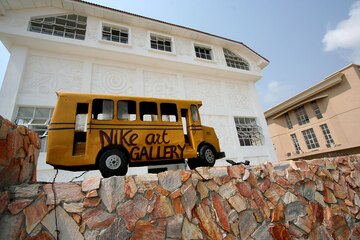
The Nike Centre for Art and Culture in Nigeria is a cultural institution dedicated to preserving and promoting traditional Nigerian art forms, particularly those associated with the Nsukka art movement. It offers workshops, exhibitions, and training programs focused on techniques such as uli painting, pottery, textiles, and sculpture. The centre serves as both an educational facility and a repository for cultural artifacts, providing resources for artists and researchers interested in indigenous Nigerian artistic practices.
The centre opened in 2019 as Nike Davies-Okundaye's main exhibition space.
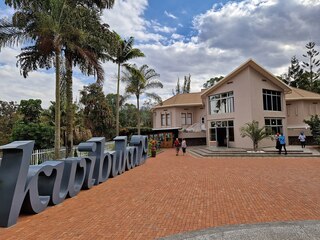
The Kigali Genocide Memorial is a documentation and education center that records the events of the 1994 genocide against the Tutsi in Rwanda. The site contains mass graves, exhibition spaces with survivor testimonies and historical records, and a research library focused on the genocide and its aftermath. It also includes a memorial garden and commemorative structures for victims. The center provides factual information about the genocide's causes, progression, and consequences while supporting public education and remembrance activities.
The memorial holds over 250,000 victims' remains from the 1994 genocide.
Bandia Reserve is a 3,500-hectare fenced wildlife park located about 65 km southeast of Dakar. It contains a mix of savanna, forest, and wetland habitats where visitors can observe giraffes, zebras, antelopes, warthogs, monkeys, and a variety of bird species on guided vehicle or walking tours. The reserve also maintains a small botanical collection and a modest lodge for overnight stays.
White rhinos were reintroduced here in 2005 after local extinction.
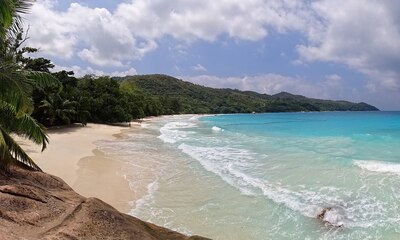
Anse Lazio is a beach on the island of Praslin in Seychelles, featuring fine white sand, clear shallow water, and a natural setting bordered by granite boulders and palm trees. It is accessible by road and footpath, with nearby parking and basic facilities including restrooms and food vendors. The site is used for swimming, snorkeling, and general beach activities, and is one of several notable beaches on the island.
Granite boulders frame the beach and create natural shade spots.
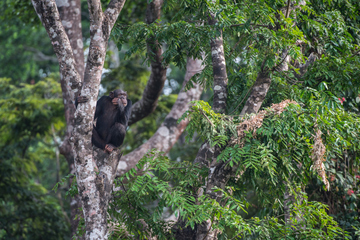
The Tacugama Chimpanzee Sanctuary, located near Freetown in Sierra Leone, is a rehabilitation center established in 1995 to care for chimpanzees rescued from illegal trade, bushmeat markets, and other forms of exploitation. The facility provides medical treatment, long-term housing, and opportunities for social integration within protected forest enclosures, while also conducting public education programs on wildlife conservation and anti-poaching efforts. Visitors can observe the chimpanzees in naturalistic settings and learn about the challenges facing primate populations in West Africa.
Tacugama was founded in 1995 by Bala Amarasekaran to rescue and rehabilitate orphaned chimpanzees.
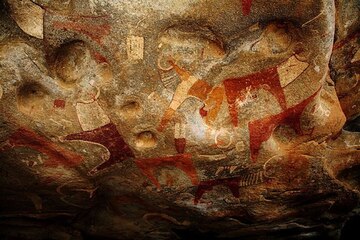
Laas Geel is a complex of rock shelters in Somaliland containing well-preserved Neolithic paintings estimated to date between 5,000 and 3,000 BCE. The artwork depicts cattle, humans, and wild animals in red, white, and ochre pigments, providing evidence of early pastoralist societies in the Horn of Africa. The site consists of multiple caves and overhangs spread across a rocky hillside, with some panels remaining relatively intact despite exposure to the elements. Access typically requires travel from Hargeisa and local guides, as the location is remote and not extensively developed for visitors.
Laas Geel contains rock shelters with paintings over 5,000 years old.
Table Mountain is a flat-topped mountain overlooking Cape Town, South Africa, rising about 1,085 meters above sea level. It features steep cliffs on three sides and a level plateau at the summit, accessible by hiking trails or a cableway. The mountain is composed primarily of sandstone and is part of Table Mountain National Park. It is a well-known landmark visible from much of the city and surrounding areas.
Table Mountain's unique "tablecloth" cloud formation is created by the south-easterly wind, known locally as the "Cape Doctor.
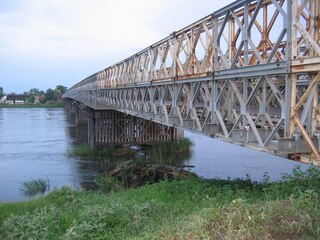
The White Nile is the main river flowing through South Sudan, originating from Lake Victoria and running northward across the country. It passes through major cities like Juba and supports agriculture, fishing, and transportation for local communities. The river’s extensive wetlands, including the Sudd, create a vast floodplain that influences seasonal water levels and provides habitat for diverse wildlife. Navigation along the river can be challenging due to shifting channels and vegetation, while seasonal flooding affects settlements along its banks.
White Nile flows north from Lake Victoria through South Sudan.
The Pyramids of Meroe are a group of ancient royal burial structures located in northern Sudan, dating from approximately the 3rd century BCE to the 4th century CE. Built by rulers of the Kingdom of Kush, the site contains over 200 steep-sided pyramids that served as tombs for kings, queens, and other members of the royal family. The structures are smaller and more sharply angled than the better-known Egyptian pyramids, and many retain remnants of their original decorative elements. The site is recognized for its archaeological significance and provides evidence of the political and cultural development of the Meroitic period in Nubian history.
Unlike Egyptian pyramids, Meroitic ones have steeper sides and smaller bases, numbering over 200.
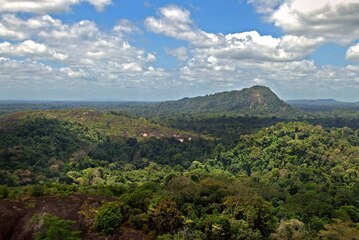
The Central Suriname Nature Reserve is a large protected area in central Suriname that preserves extensive tracts of tropical rainforest, savanna, and mountainous terrain. It supports a wide range of plant and animal species, including several that are rare or endemic to the region. The reserve includes parts of the Upper Coppename River watershed and features geological formations such as granite domes and plateaus. Access is limited and infrastructure within the reserve is minimal, reflecting its primary designation for conservation and scientific research rather than tourism.
The reserve covers nearly 1.6 million hectares, making it one of the largest protected areas in the Amazon basin.
The Ngorongoro Crater in Tanzania, a UNESCO World Heritage Site, offers visitors a unique opportunity to explore one of the most stunning natural wonders in Africa. Formed by a collapsed volcano, the crater is home to an incredible diversity of wildlife, including the Big Five: lions, elephants, leopards, buffalo, and rhinos. Visitors can enjoy game drives, bird watching, and guided walking safaris, all while taking in the breathtaking landscapes and rich cultural heritage of the Maasai people who inhabit the area.
Ngorongoro Crater hosts over 25,000 animals, making it a prime spot for wildlife viewing.
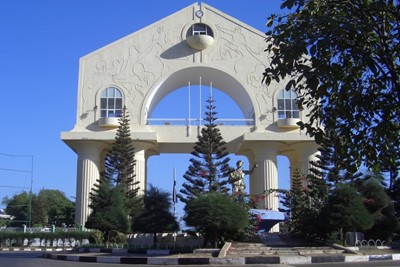
Arch 22 is a monumental arch located in Banjul, The Gambia, constructed in 1996 to commemorate the 1994 coup led by Yahya Jammeh. The 35-meter-high structure features a large central archway flanked by two smaller arches and is adorned with reliefs depicting scenes from Gambian history and culture. It stands at a major intersection near the entrance to the capital, serving as a prominent landmark and gathering point for public events.
Arch 22 commemorates the 1981 coup that brought President Jawara back to power and ended the Field People's Democratic Revolution.
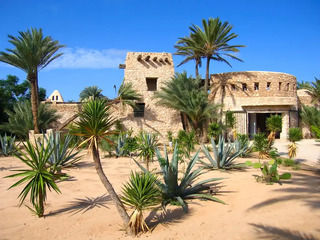
Djerba Explore Park is a large leisure complex on the Tunisian island of Djerba that combines a crocodile farm, a traditional Berber village, a small museum, and several craft workshops. Visitors can observe Nile crocodiles in open-air enclosures, walk through reconstructed dwellings that show regional building techniques and daily life, and watch artisans demonstrate pottery, weaving, and metalwork. The site also includes a modest exhibition area with artifacts and information panels on local history and ecology.
Opened in 2002, the park houses crocodiles, tortoises, and lemurs.
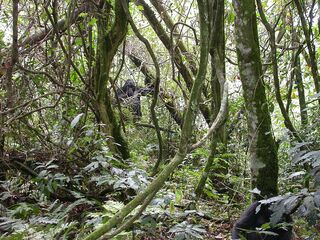
Bwindi Impenetrable National Park covers 331 square kilometers of montane rainforest in southwestern Uganda. The park contains roughly half of the world’s remaining mountain gorillas, along with chimpanzees, forest elephants, and more than 350 bird species. Its steep terrain and dense vegetation make access difficult, and visitors must obtain permits and follow strict trekking regulations. The park also supports local communities through revenue-sharing programs tied to tourism.
Bwindi Impenetrable National Park is home to nearly half of the world's remaining mountain gorillas.
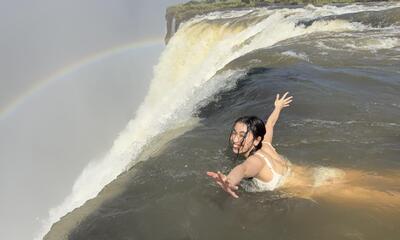
Devil's Pool is a natural rock pool located at the edge of Victoria Falls on the Zambian side of the Zambezi River. During the dry season, when water levels are low, visitors can swim in the pool right beside the precipice, separated from the drop by a natural rock barrier. The site is accessible by boat or guided tour and is typically open for a few months each year, depending on rainfall and river flow.
Devil's Pool formed by erosion on the Zambezi basalt shelf above Victoria Falls.
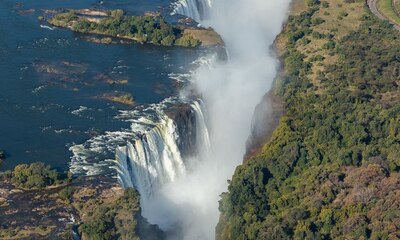
Mosi-oa-Tunya, also known as Victoria Falls, is a large waterfall on the Zambezi River at the border between Zimbabwe and Zambia. The falls span about 1.7 kilometers and reach heights of over 100 meters, creating a significant volume of mist and spray. The surrounding area includes national parks on both sides of the border that support wildlife viewing and hiking trails. The site is accessible by road and offers basic visitor facilities including viewpoints and guided tours.
Victoria Falls drops 108 meters over a 1.7 km basalt gorge.
Asia
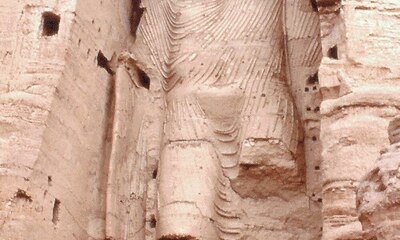
The Cultural Landscape and Archaeological Remains of the Bamiyan Valley encompass the historic valley in central Afghanistan where successive Buddhist communities established monasteries, sanctuaries, and colossal Buddha figures between the 1st and 13th centuries. The site preserves extensive archaeological traces including cave complexes, fortified structures, ancient irrigation systems, and the niches that once housed the two monumental Buddha statues destroyed in 2001. Its cultural significance stems from the layered evidence of artistic, religious, and commercial exchanges along historic trade routes connecting Central Asia and South Asia.
The Bamiyan Valley was once home to the iconic giant Buddha statues destroyed by the Taliban.
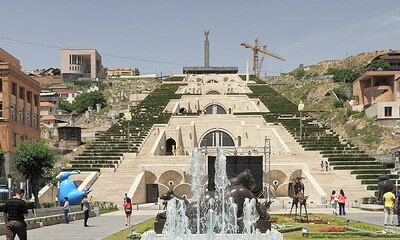
The Cafesjian Center for the Arts occupies the Cascade complex in central Yerevan, a multi-level architectural structure that houses rotating exhibitions of contemporary art alongside a permanent collection of glass works by artists such as Dale Chihuly. The center presents temporary shows by Armenian and international artists, maintains public sculpture terraces that visitors can access without an admission fee, and operates educational programs and events throughout the year.
The Cafesjian Center for the Arts houses one of the largest glass sculptures in the world.
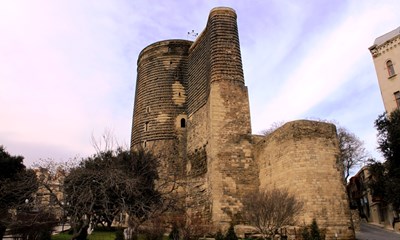
The Walled City of Baku is the historic core of Azerbaijan’s capital, enclosed by medieval defensive walls that date back centuries. Its narrow, winding streets contain a mix of preserved structures including the Palace of the Shirvanshahs, the Maiden Tower, and numerous mosques, caravanserais, and bathhouses. The area also features residential buildings from later periods that reflect successive layers of occupation and architectural influence. Today, the district functions as both an archaeological site and a functioning urban neighborhood within the modern city.
The Walled City of Baku, a UNESCO site, features the 12th-century Maiden Tower with panoramic views.
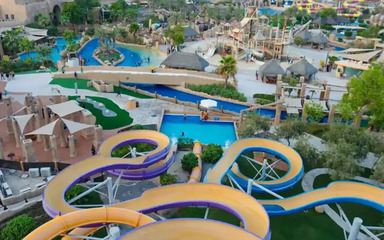
The Lost Paradise of Dilmun Water Park in Bahrain offers an exciting escape with its array of exhilarating water attractions and lush landscapes. Visitors can plunge into adventure with thrilling rides like the giant wave pool, zoom down high-speed slides, or relax in the lazy river. The park also features special zones for children, ensuring fun for the whole family. With a blend of leisure and adrenaline-pumping activities, this water park provides a memorable experience for all ages.
Lost Paradise of Dilmun Water Park features Bahrain's largest wave pool, perfect for cooling off.
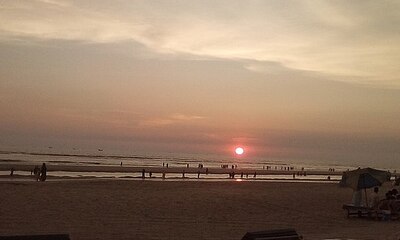
Cox's Bazar Beach in Bangladesh offers a unique travel experience with its stunning 120-kilometer stretch of sandy shoreline, making it the longest natural sea beach in the world. Visitors can enjoy a variety of activities, such as exploring the nearby Himchari National Park, taking a boat trip to the serene Saint Martin's Island, or discovering the local culture and markets in the town. Whether you're looking to relax by the sea, indulge in fresh seafood, or experience the local traditions, Cox's Bazar provides a perfect getaway for travelers seeking both adventure and tranquility.
Cox's Bazar Beach is the world's longest natural sea beach, stretching over 120 kilometers.
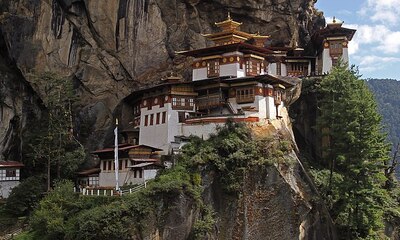
Paro Taktsang Monastery, often referred to as the Tiger's Nest, is an iconic Buddhist site perched on a cliffside in Bhutan. This sacred monastery offers breathtaking views of the Paro Valley and provides visitors with a unique opportunity to explore its ancient architecture and spiritual ambiance. Visitors can hike up the scenic trail to the monastery, enjoy the tranquility of the surrounding nature, and immerse themselves in the rich cultural heritage of Bhutan. The site is not only a place of pilgrimage but also a testament to Bhutan's deep-rooted spiritual traditions and stunning landscapes.
Paro Taktsang Monastery, perched on a cliff, requires a scenic 2-hour uphill trek to reach.
The Omar Ali Saifuddien Mosque in Brunei is a stunning example of Islamic architecture, known for its striking gold dome and marble minarets. Located in the capital city of Bandar Seri Begawan, this architectural marvel offers visitors the chance to explore its beautifully landscaped gardens and the serene artificial lagoon that surrounds it. As you stroll through the mosque's exquisite interiors, you can admire the intricate mosaics, stained glass windows, and Italian marble that contribute to its grandeur. Additionally, the mosque's strategic location provides a picturesque view of the Kampong Ayer water village, offering a unique cultural experience.
The Omar Ali Saifuddien Mosque's stunning main dome is covered in pure gold, reflecting opulence.
Angkor Wat in Cambodia, a stunning testament to the grandeur of the Khmer Empire, stands as the world's largest religious monument. Visitors can explore its intricate bas-reliefs, which depict epic Hindu stories, and marvel at the architectural prowess displayed in its towering spires. A sunrise visit offers a breathtaking view as the temple's silhouette emerges against the morning sky. Additionally, the surrounding Angkor Archaeological Park is home to other remarkable structures like the enigmatic Bayon Temple with its serene stone faces and the jungle-clad Ta Prohm, where nature intertwines with ancient ruins.
Angkor Wat is believed to have been built as a Hindu temple, but later transformed into a Buddhist temple complex.
The Great Wall of China, an iconic symbol of ancient Chinese ingenuity and perseverance, stretches over 13,000 miles across northern China. Visitors can explore various sections of the wall, each offering unique experiences such as hiking along the rugged terrain of the Jinshanling section, enjoying panoramic views from the Mutianyu area, or delving into the historical significance at the Badaling section. Additionally, travelers can visit nearby watchtowers, museums, and local villages to gain a deeper understanding of the wall's historical context and cultural importance.
The Great Wall of China is not a single continuous wall, but a series of walls and fortifications built over different dynasties.
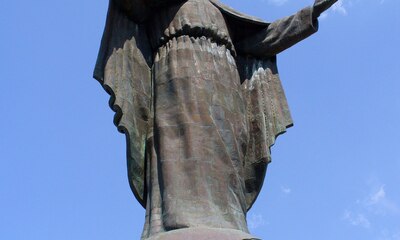
Cristo Rei of Dili is a 27-meter-tall statue of Jesus Christ situated on a hill overlooking the capital of Timor-Leste. Completed in 1996, the monument stands on a globe-shaped pedestal and is reached by a staircase of 500 steps. The site includes a small chapel at the base and offers views across the coastline and surrounding hills.
Built in 1996, the monument was a gift from the Indonesian government.
The Taj Mahal in Agra, India, stands as a stunning testament to Mughal architecture and an enduring symbol of love. Built by Emperor Shah Jahan in memory of his wife Mumtaz Mahal, this iconic white marble mausoleum attracts millions of visitors each year. While exploring the Taj Mahal, you can marvel at its intricate carvings, walk through its lush gardens, and capture breathtaking photos of its reflection in the surrounding pools. Don't miss the chance to visit the nearby Agra Fort and the charming Mehtab Bagh for a different perspective of this architectural marvel.
You will not be alone! An estimated 7-8 million visitors each year make this India's top destination.
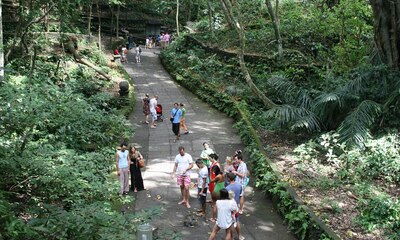
The Sacred Monkey Forest Sanctuary is a nature reserve and Hindu temple complex located in Ubud, Bali, Indonesia. It is home to several hundred long-tailed macaques that live freely throughout the grounds and interact regularly with visitors. The site contains multiple stone temples, shrines, and statues set among dense tropical trees and river gorges. It is maintained by local village councils and serves both as a protected wildlife habitat and a place of religious observance.
Three Hindu temples from the 14th century stand inside the forest.
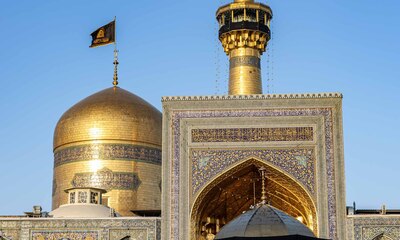
The Holy Shrine of Imam Reza at Haram-e Razavi is a major religious complex in Mashhad, Iran, centered on the tomb of Imam Reza, the eighth Shia Imam. It includes multiple courtyards, mosques, libraries, and museums, and serves as an active site for prayer, pilgrimage, and religious study. The architecture features domes, minarets, and tilework typical of Persian Islamic design, with ongoing expansions to accommodate large numbers of visitors.
Imam Reza, the eighth Shia Imam, died in 818 AD and was buried here, making it Islam's largest mosque by area.
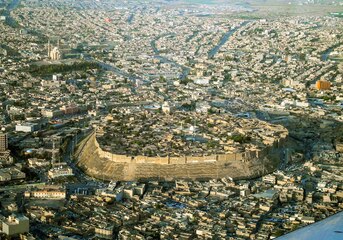
The Erbil Citadel is a large, fortified mound in the center of Erbil, Iraq, with evidence of continuous human settlement dating back several thousand years. It consists of a raised, roughly oval area surrounded by lower ground and contains layers of buildings from multiple historical periods. The site is recognized by UNESCO as a World Heritage property and remains an important reference point for understanding the region’s long-term urban development.
A UNESCO World Heritage Site since 2014, it is one of the world's oldest inhabited places.
Nestled within the ancient walls of Jerusalem lies a city that bears witness to centuries of history, culture, and spirituality. Embark on a transformative journey to the heart of Israel, where a tapestry of traditions and faiths intertwine harmoniously. From the sacred Western Wall to the vibrant markets of the Old City, Jerusalem invites you to explore its captivating streets, taste its diverse culinary delights, and immerse yourself in the rich tapestry of its past. Experience the ethereal beauty of the Dome of the Rock, stroll through the bustling Machane Yehuda market, and wander the narrow alleyways of the Armenian Quarter. Whether you seek religious enlightenment, cultural immersion, or simply an unforgettable adventure, Jerusalem promises an enchanting and soul-stirring experience like no other.
Jerusalem is home to the Western Wall, an ancient limestone wall that is considered one of the most sacred sites in Judaism.
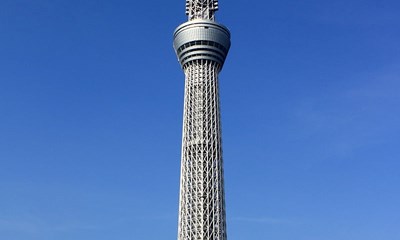
Tokyo Skytree is a broadcasting and observation tower in Sumida, Tokyo, completed in 2012 and standing at 634 meters. It features two observation decks at 350 and 450 meters that provide views across the city and surrounding areas on clear days. The structure includes retail spaces, restaurants, and an aquarium at its base, along with direct connections to nearby train stations.
Tokyo Skytree became the tallest tower in the world at 634 meters when it opened in 2012.
Petra is an ancient Nabataean city in southern Jordan, carved directly into rose-red sandstone cliffs more than 2,000 years ago. The site features monumental facades, temples, tombs, and a colonnaded street that once formed the heart of a thriving trading center. Visitors reach the main monuments through a narrow gorge known as the Siq before the landscape opens to reveal the iconic Treasury and other rock-cut structures. Beyond the central area lie additional ruins, a high place of sacrifice, and a sprawling necropolis. The combination of well-preserved architecture and dramatic desert setting makes Petra a major archaeological destination.
Petra in Jordan is home to the iconic Treasury building, which was featured in the movie "Indiana Jones and the Last Crusade."
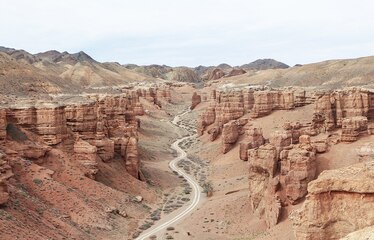
Charyn Canyon is a deep river-cut gorge in southeastern Kazakhstan, extending roughly 90 kilometers along the Charyn River. Its layered sedimentary cliffs display red, pink, and gray strata formed over millions of years, with the most striking formations concentrated in a 2-kilometer stretch known as the Valley of Castles. The site offers hiking trails along the canyon rim and floor, river access points, and basic camping facilities, and it lies about 200 kilometers east of Almaty.
Charyn Canyon, often called Kazakhstan's Grand Canyon, formed over millions of years by the Charyn River's erosion.
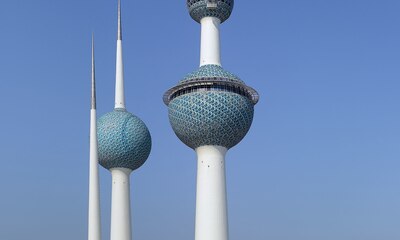
The Kuwait Towers are a group of three slender concrete towers on a small peninsula in Kuwait Bay, completed in 1979. The tallest tower reaches 187 meters and features a revolving restaurant and observation deck, while the second holds a water reservoir and the third supports lighting equipment. The structures are known for their distinctive blue-and-green spherical forms and serve as a recognizable landmark visible from much of the city.
The main tower stands 187 meters tall with a revolving restaurant.
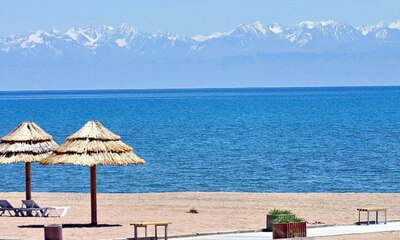
Lake Issyk-Kul is a large, brackish mountain lake in eastern Kyrgyzstan, situated at an elevation of roughly 1,600 meters and measuring about 180 kilometers in length. It remains ice-free year-round despite its high altitude, due to its considerable depth and mild salinity. The lake is bordered by the snow-capped peaks of the Tian Shan range and fed by numerous mountain streams. Several settlements and resorts are located along its northern shore, while the southern side is more sparsely populated. The surrounding region includes protected areas and archaeological sites.
Issyk-Kul is the world's second-largest high-altitude lake after Lake Titicaca.
Kuang Si Falls is a multi-tiered waterfall located about 30 kilometers south of Luang Prabang, Laos. The site features a series of cascades that drop into turquoise pools, with wooden walkways and viewing platforms providing access to different levels. The main drop reaches approximately 50 meters, while smaller streams and pools extend below it. The surrounding area includes forest trails, basic facilities, and areas designated for swimming. The falls are accessible by road and are commonly visited as a day trip from Luang Prabang.
Water from Kuang Si Falls is used by the nearby bear sanctuary.
Jeita Grotto is a system of two connected limestone caves in Lebanon, extending more than nine kilometers into the mountains north of Beirut. The lower cave contains an underground river that has been explored by boat, while the upper cave features large chambers with extensive stalactite and stalagmite formations. The site includes a cable car and a walkway system that allows visitors to tour both sections. It has been used as a water source and has been developed for public access with lighting and pathways.
Jeita Grotto, discovered in 1836 by American explorer William Thomson, spans over 9 kilometers of underground passages.
The Petronas Twin Towers are a pair of identical skyscrapers in Kuala Lumpur, Malaysia, that were the tallest buildings in the world from 1998 to 2004. Each tower rises 88 stories and is connected by a double-decker skybridge on the 41st and 42nd floors. The structures feature a postmodern Islamic architectural style with geometric patterns and are part of a larger mixed-use development that includes a shopping mall, concert hall, and park. Visitors can access an observation deck on the 86th floor for views of the city.
A skybridge connects the towers at the 41st and 42nd floors.
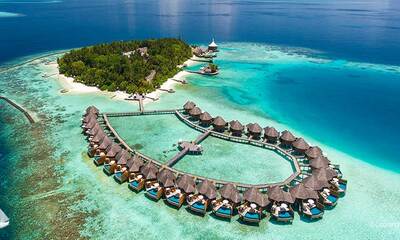
Alimatha Island is a small coral island in the Vaavu Atoll of the Maldives, featuring a compact resort with beachfront accommodation and basic amenities. The island offers access to surrounding reefs for snorkeling and diving, along with standard water sports such as kayaking and boat excursions. It includes a house reef suitable for observing marine life and provides dining and relaxation facilities typical of mid-range Maldivian resorts.
Speedboat transfers from Male take about 55 minutes.
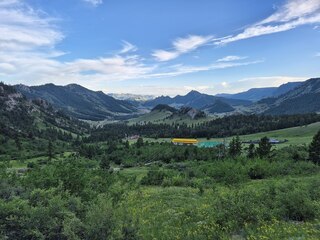
Gorkhi-Terelj National Park lies roughly 50 kilometers northeast of Ulaanbaatar and covers rolling steppe, granite outcrops, and forested valleys along the Terelj River. The park is used year-round for hiking, horseback riding, and visiting traditional ger camps, while its rock formations and small Buddhist monasteries draw day visitors from the capital. Winters bring reliable snow cover for cross-country skiing and ice fishing on frozen streams.
Terelj has granite rock formations including the well-known Turtle Rock.
The Shwedagon Pagoda is a large Buddhist stupa located in Yangon, Myanmar, standing approximately 99 meters tall and covered in gold leaf. The structure contains relics believed to include strands of hair from the Buddha and serves as Myanmar’s most significant religious site, attracting both worshippers and visitors throughout the year. The complex includes numerous smaller shrines, statues, and pavilions surrounding the central stupa, with four entrances marked by large stairways and guarded by mythological figures. The pagoda’s platform is elevated above street level and features reflective surfaces and numerous bells that are struck by visitors.
The Shwedagon Pagoda is believed to enshrine eight hairs of the Buddha, making it one of the most sacred Buddhist sites in the world.
Mount Everest, towering at 8,848 meters, is the world's highest peak and a prominent feature of Nepal's Himalayan range. This majestic mountain offers a range of activities for adventurers and nature enthusiasts alike. Trekkers can explore the famous Everest Base Camp trek, while climbers often attempt to summit the peak itself. For those seeking less strenuous pursuits, the region provides opportunities for cultural immersion in Sherpa villages, visits to ancient monasteries, and breathtaking scenic flights that offer unparalleled views of the snow-capped peaks.
At Everest Base Camp, the Khumbu Glacier moves up to one meter per day, creating constant shifts.
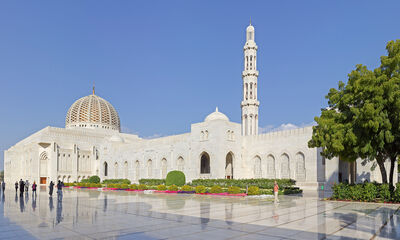
The Sultan Qaboos Grand Mosque in Muscat is a large modern mosque completed in 2001 that welcomes non-Muslim visitors during designated hours. The complex includes a main prayer hall with one of the world’s largest handwoven carpets and a Swarovski crystal chandelier, along with four smaller prayer halls, a library, and extensive marble courtyards. Visitors must dress modestly, remove shoes before entering carpeted areas, and respect ongoing prayer times.
Its chandelier contains over 600,000 Swarovski crystals and 1,122 bulbs.
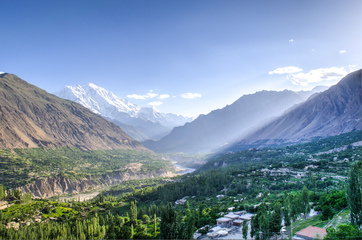
Hunza Valley is a high-altitude region in northern Pakistan, located along the Hunza River and surrounded by steep mountain ranges including parts of the Karakoram. The valley contains small villages and terraced fields that support local agriculture, with elevations generally between 2,000 and 3,000 meters. It serves as a passage point for travelers heading toward the China border via the Khunjerab Pass and is known for its relatively stable climate compared to surrounding high peaks.
The valley sits at the crossroads of ancient Silk Road trading routes.
White Beach is a long stretch of light-colored sand on the Philippine island of Boracay, bordered by palm trees and low-rise buildings that house hotels, restaurants, and shops. The shoreline is relatively flat and open, with calm, shallow water that extends several meters before dropping off. During the day the area sees steady foot traffic from visitors walking, swimming, or renting small boats, while at night many of the establishments set out tables and lights along the sand. Access is straightforward via the island’s main paths and short boat rides from the mainland.
White Beach has a 4 km stretch of fine white sand.
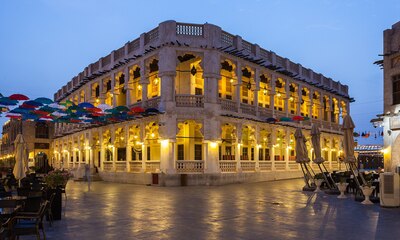
Souq Waqif is a traditional marketplace in Doha, Qatar, featuring narrow lanes lined with shops selling textiles, spices, gold, and souvenirs. The area includes restaurants and cafes serving local and regional cuisine, along with open spaces where visitors can observe daily commerce and interact with vendors. The souq maintains a mix of historic and restored architecture, with some sections accommodating modern retail alongside longstanding stalls.
The souq was nearly demolished in the 1980s but restored to preserve Doha's traditional heritage.
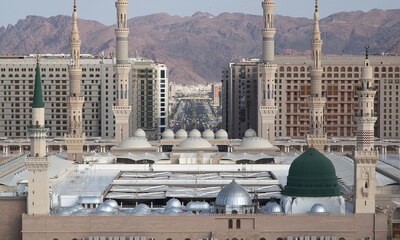
Al Masjid an Nabawi is the Prophet's Mosque located in the center of Medina, Saudi Arabia. The mosque serves as one of the holiest sites in Islam and attracts millions of visitors each year for prayer and pilgrimage. The complex includes the tomb of Prophet Muhammad and features multiple minarets, large courtyards, and extensive prayer halls that accommodate large numbers of worshippers. The site is managed by Saudi authorities and includes modern facilities alongside its historical elements.
Prophet Muhammad is buried in the green-domed section of the mosque.
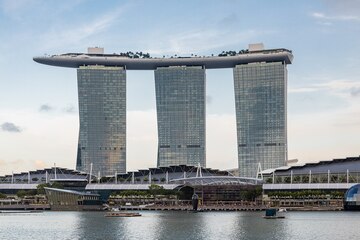
Marina Bay Sands is a large integrated resort in Singapore consisting of three towers topped by a cantilevered skypark. The complex includes a casino, hotel, convention center, shopping mall, and multiple restaurants and bars. The skypark features an infinity pool and observation deck offering views of the city and harbor. The resort is connected to Gardens by the Bay and serves as a central point for both visitors and locals.
The infinity pool sits 200 meters above ground on the SkyPark.
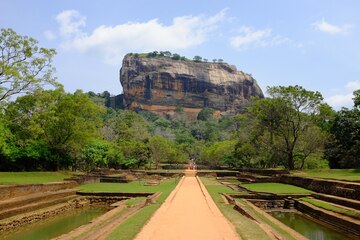
Sigiriya Lion Rock is an ancient rock fortress and palace complex in central Sri Lanka, rising about 180 meters above the surrounding plains. Built in the 5th century by King Kashyapa, the site features the remains of a royal citadel at the summit, accessible via a steep staircase that passes between the massive stone paws of a lion statue that once guarded the approach. The rock face below the summit contains well-preserved frescoes depicting celestial maidens, while the surrounding gardens include water features, pathways, and terraced structures. The site also preserves evidence of earlier Buddhist monastic use and later occupation.
Sigiriya was built as a fortress palace by King Kashyapa around 477 CE.
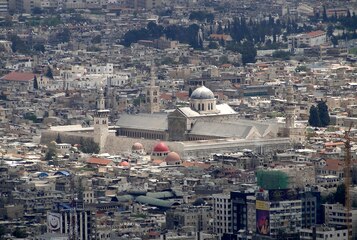
The Damascus Umayyad Mosque is one of the oldest and largest mosques in the world, originally constructed in the early 8th century on the site of earlier Roman and Byzantine structures. Its expansive prayer hall, marble columns, and extensive mosaics reflect a blend of Roman, Byzantine, and early Islamic architectural styles. The mosque houses important religious relics and serves as a central place of worship and community gathering in Damascus.
The Umayyad Mosque was originally a Roman temple dedicated to Jupiter.
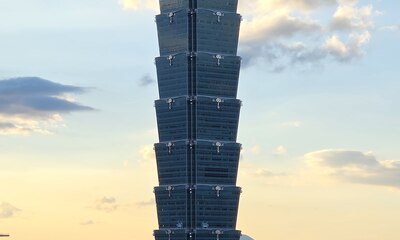
Visiting the top of Taipei 101 involves taking an elevator to the 91st-floor indoor observatory, where visitors can look out over Taipei’s dense cityscape and surrounding mountains. On clear days the view extends to distant ranges, and the space includes displays about the building’s engineering and a small outdoor deck on the 91st floor. The experience is straightforward: pay admission, ride up, spend time at the windows, and return to street level.
Taipei 101 stands 508 meters tall with 101 floors.
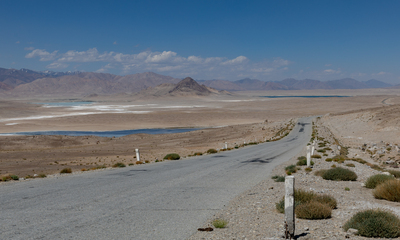
The Pamir Highway is a high-altitude route through eastern Tajikistan that follows old Soviet military roads across mountain passes exceeding 4,000 meters. Travelers typically start in Dushanbe or Khorog and continue toward Murghab or the Kyrgyz border, passing small settlements, river valleys, and occasional border checkpoints. The route requires advance planning for fuel, permits, and weather, as services are limited and road conditions can change quickly.
The Pamir Highway, built in the 1930s, connects Osh in Kyrgyzstan to Dushanbe in Tajikistan through stunning high-altitude passes.
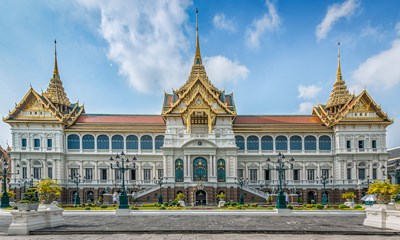
The Grand Palace in Bangkok was the official residence of the Kings of Siam from 1782 until 1925 and remains an active site for royal ceremonies. The complex includes several buildings constructed in traditional Thai architectural styles alongside European-influenced structures added during the 19th and early 20th centuries. Visitors can see the royal halls, throne rooms, and the Temple of the Emerald Buddha, which houses Thailand’s most sacred religious image. The site is managed by the Bureau of the Royal Household and maintains strict dress codes and behavioral guidelines for all entrants.
The Emerald Buddha is carved from a single jade stone and stands 66 cm tall.
The Burj Khalifa is a skyscraper located in downtown Dubai, United Arab Emirates. Completed in 2010, it stands at 828 meters (2,717 feet) tall, making it the tallest building in the world. The structure contains residential apartments, offices, a hotel, and observation decks on floors 124 and 148 that provide views of the city and surrounding desert landscape.
At 828 meters tall, it held the record as the world's tallest structure for over a decade.
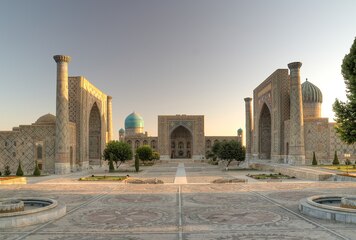
Registan Square in Samarkand, Uzbekistan, is a large public plaza bordered by three historic madrasahs dating from the 15th and 17th centuries. The buildings feature tiled domes, minarets, and geometric tilework that cover most exterior surfaces. The square itself is a flat, open space historically used for gatherings and markets, now maintained as a pedestrian area with basic seating and lighting for visitors.
Registan Square was the main public square of medieval Samarkand.
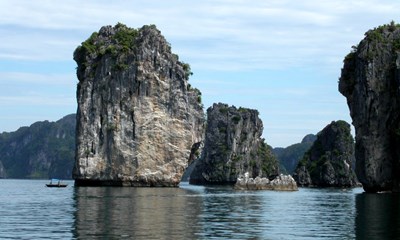
Ha Long Bay is a coastal area in northern Vietnam featuring thousands of limestone karsts and islets rising from calm waters. The region includes caves, floating villages, and smaller islands that can be explored by boat. It attracts visitors for day trips, overnight cruises, and activities such as kayaking and hiking on some of the larger formations.
Ha Long Bay, a UNESCO World Heritage Site, features over 1,600 limestone islands and islets rising from emerald waters, creating a stunning natural landscape.
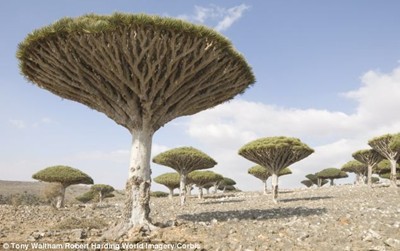
Socotra Island is a remote Yemeni territory in the Arabian Sea, notable for its high number of endemic plant and animal species, including the distinctive dragon's blood tree. The island features a rugged landscape of limestone plateaus, coastal plains, and granite peaks, with a climate that produces arid conditions for much of the year. Its isolation has resulted in limited infrastructure and minimal tourism development, and access typically requires flights from mainland Yemen or nearby regions.
Socotra's Dragon's Blood Trees are unique to the island and get their name from the red sap they produce.
Caribbean
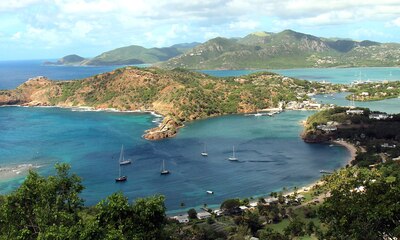
Exploring Shirley Heights and Fort James in Antigua and Barbuda offers a blend of history, stunning views, and cultural experiences. At Shirley Heights, visitors can enjoy panoramic vistas of the island and its coastline, especially breathtaking during the famous Sunday sunset parties featuring local music and barbecue. Meanwhile, Fort James provides a glimpse into the island's colonial past, with its historic cannons and fortifications. These sites promise a memorable journey through Antigua's scenic landscapes and rich heritage.
Shirley Heights offers breathtaking sunset views, while Fort James showcases Antigua's rich colonial history.
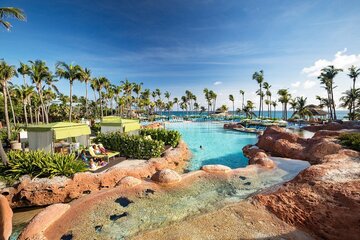
Aquaventure Water Park in the Bahamas offers an exhilarating escape for thrill-seekers and relaxation enthusiasts alike. Spanning 141 acres, this water park boasts a variety of attractions, including adrenaline-pumping water slides, a mile-long river ride with rolling rapids, and a serene, white-sand beach for those looking to unwind. Visitors can explore the iconic Mayan Temple, experience the rush of the Leap of Faith slide, or float peacefully along the Lazy River. With a blend of excitement and leisure, Aquaventure promises an unforgettable adventure for all ages.
Aquaventure Water Park features a mile-long river ride with rapids and wave surges for excitement.
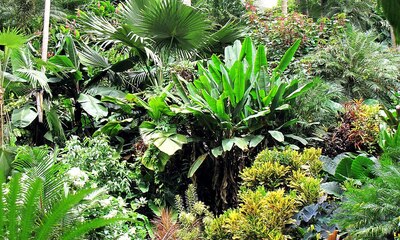
Hunte's Gardens in Barbados offers a serene escape into nature's splendor, where visitors can immerse themselves in a lush, tropical paradise. As you wander through the winding paths, you'll discover an array of exotic plants and flowers, each contributing to the garden's enchanting atmosphere. The tranquil setting provides the perfect backdrop for relaxation, and visitors can also enjoy the delightful experience of sipping tea amidst the greenery or engaging in a friendly chat with the garden's creator, Anthony Hunte, who often shares fascinating stories about the garden's history and flora.
Hunte's Gardens in Barbados features hidden seating areas perfect for quiet reflection amidst lush flora.
Playa Varadero, often hailed as one of Cuba's most stunning beach destinations, offers a pristine stretch of white sand and crystal-clear turquoise waters. Visitors can indulge in a variety of activities, from snorkeling and scuba diving in the colorful coral reefs to exploring the nearby Cueva de Ambrosio with its ancient cave paintings. For those interested in history and culture, a visit to the Varadero Museum provides insights into the region's past, while the local markets offer a taste of Cuban crafts and cuisine. Golf enthusiasts can enjoy a round at the Varadero Golf Club, set against the backdrop of the Caribbean Sea.
Playa Varadero is home to the Varadero Golf Club, Cuba's only 18-hole golf course.
Grand Anse is a well-known beach located on the southwestern coast of Grenada, stretching over two miles of soft, white sand. It is situated near the island's capital, St. George's, making it easily accessible for both locals and visitors. The beach is framed by calm, clear waters and offers a backdrop of lush, green hills. Known for its relaxed atmosphere, Grand Anse provides a range of amenities, including nearby accommodations, eateries, and opportunities for water sports, making it a popular spot for both relaxation and recreation.
The beach is a short 10-minute drive from St. George's, Grenada's capital city.
Citadelle Laferrière is a large stone fortress built in the early 19th century on a mountain ridge near Milot in northern Haiti. The structure features thick defensive walls, multiple levels of cannon batteries, and extensive internal spaces that include barracks, storage areas, and a chapel. It was constructed as part of Haiti’s post-independence defense system and remains one of the largest fortresses in the Americas. The site is accessible by road and footpath, and visitors can walk through its courtyards and ramparts while viewing the surrounding landscape.
The Citadelle Laferrière was built between 1805 and 1820 by King Henry Christophe to defend against French invaders.
Dunn's River Falls is a series of cascading waterfalls located near Ocho Rios on Jamaica's northern coast. The site features multiple tiers of falls that visitors can climb with the assistance of guides, moving from the beach level up through the river system. The surrounding area includes walking paths and viewing areas that allow observation of the falls from various angles. The location combines natural rock formations with tropical vegetation typical of the region.
Dunn's River Falls stands about 180 meters tall and is renowned for its unique vertical river climb.
The Pitons in Saint Lucia are a must-see destination for any traveler seeking adventure and natural beauty. These iconic twin peaks rise dramatically from the Caribbean Sea, offering breathtaking views and photo opportunities. Visitors can hike to the top of Gros Piton for a challenging but rewarding experience, or relax on the beaches of nearby Soufriere. Snorkeling, diving, and sailing are also popular activities in this stunning region.
The Pitons in Saint Lucia are two volcanic spires that are a UNESCO World Heritage Site.
Central America
Hol Chan Marine Reserve in Belize offers an unforgettable experience for nature enthusiasts and adventure seekers alike. Visitors can snorkel or dive among the colorful coral reefs teeming with diverse marine life, including stingrays, nurse sharks, and a myriad of tropical fish. The reserve also features the popular Shark Ray Alley, where snorkelers can swim alongside gentle nurse sharks and southern stingrays. With its rich biodiversity and stunning underwater landscapes, Hol Chan Marine Reserve promises an exciting and educational journey into the wonders of the Caribbean Sea.
Hol Chan Marine Reserve is home to over 160 fish species, including the mesmerizing spotted eagle ray.
Playa Manuel Antonio in Costa Rica offers a stunning combination of lush rainforest and pristine beaches, making it a perfect destination for nature lovers and adventure seekers. Visitors can explore the renowned Manuel Antonio National Park, where they might spot diverse wildlife such as monkeys, sloths, and colorful birds. The area also provides opportunities for snorkeling, kayaking, and hiking, ensuring a memorable experience for those who enjoy both relaxation and outdoor activities.
Playa Manuel Antonio offers stunning biodiversity, with capuchin monkeys often spotted playfully near the shore.
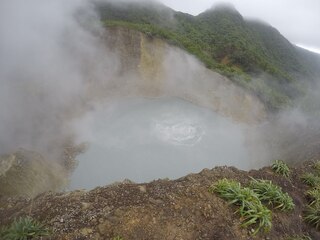
The Boiling Lake is a flooded fumarole located in the Morne Trois Pitons National Park in Dominica. It is one of the largest hot lakes in the world, measuring roughly 60 to 90 meters across, and is filled with water heated by volcanic activity beneath the surface. The lake sits in a deep, steep-sided depression surrounded by dense rainforest and is reached by a hiking trail that passes through varied terrain and geothermal features. Temperatures at the surface can reach near boiling point, and the water often emits steam and sulfurous gases. The site is monitored due to fluctuations in water level and temperature linked to volcanic and seismic activity.
The Boiling Lake is the world's second-largest hot spring, constantly bubbling due to magma-heated water.
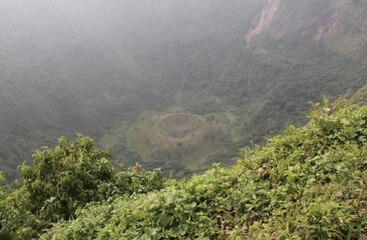
Parque Nacional El Boquerón is a national park in El Salvador centered on the crater of the San Salvador Volcano, featuring hiking trails, viewpoints, and a small museum about local flora and fauna.
The park sits inside an ancient volcanic crater that last erupted in 1917.
Located in the northern region of Guatemala, Tikal National Park is a must-visit destination for adventure seekers and history enthusiasts. This ancient Mayan site boasts towering pyramids, intricate temples, and well-preserved ruins that offer a glimpse into the rich cultural heritage of the Mayan civilization. Embark on a thrilling jungle trek to witness the stunning sunrise from atop Temple IV, explore the labyrinthine network of pathways, and immerse yourself in the mystical ambiance of this awe-inspiring archaeological wonder.
Tikal, one of the largest ancient Mayan cities, was once home to more than 100,000 people and is now a UNESCO World Heritage site.
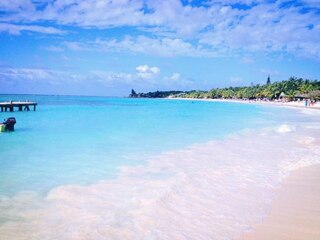
Little French Key is a small private island located off the coast of Roatán, Honduras. It features a mix of sandy beaches, tropical vegetation, and calm surrounding waters suitable for swimming and snorkeling. The island includes basic visitor facilities such as day-use cabanas, a restaurant, and equipment rentals for water activities. Access is typically arranged through boat transfers from nearby areas on Roatán.
Little French Key is a private island off Roatán, Honduras.
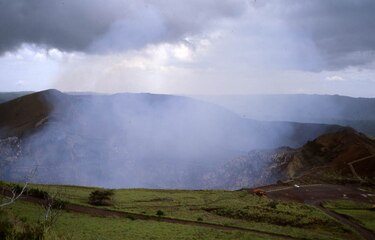
Masaya Volcano National Park in Nicaragua centers on an active volcanic complex that includes several craters, most notably the continuously smoking Santiago Crater. The park features marked trails that lead to overlooks where visitors can view bubbling lava, fumaroles, and solidified lava fields. It also contains dry tropical forest and bat caves that provide habitat for local wildlife. Facilities include a visitor center and parking areas near the main crater rim, and the site is typically reached by a short drive from Managua.
Masaya Volcano's Santiago crater emits continuous gas plumes visible from the rim.
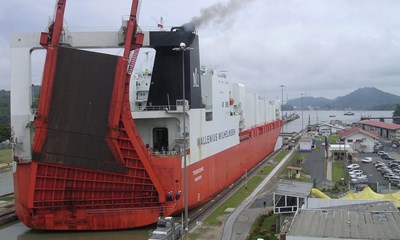
The Panama Canal is a 51-mile artificial waterway in Panama that connects the Atlantic and Pacific Oceans. Completed in 1914, it allows ships to transit between the two oceans without navigating around South America, significantly shortening travel distances for maritime trade. The canal uses a system of locks to raise and lower vessels through the isthmus, managing a difference in water levels of approximately 85 feet. It remains one of the most important shipping routes in the world, handling millions of tons of cargo annually.
Transit time for a vessel averages 8 to 10 hours.
Europe
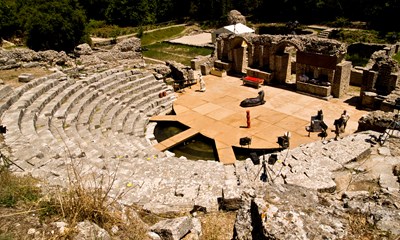
Butrint is an archaeological site in southern Albania featuring the remains of a Greek colony that later became a Roman city and Byzantine center. The ruins include a well-preserved theater, city walls, early Christian basilicas, and structures from multiple historical periods spanning several centuries. Located on a peninsula surrounded by a lagoon and accessible by a short ferry ride, the site provides evidence of continuous occupation and cultural transitions in the region.
Butrint was an important Greek and Roman city, showcasing well-preserved ancient ruins and artifacts.
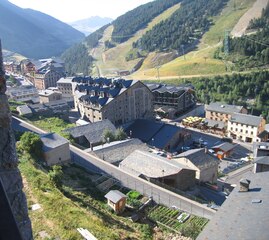
Grandvalira Ski Resort in Andorra is one of the largest ski areas in the Pyrenees, covering over 200 kilometers of marked pistes across multiple sectors including Soldeu, El Tarter, Canillo, and Grau Roig. The resort offers a range of terrain suitable for beginners through to advanced skiers and snowboarders, with numerous lifts, snow parks, and dedicated learning zones. It operates primarily from December to April, depending on snow conditions, and provides access to both alpine skiing and other winter activities such as snowshoeing and cross-country trails. Facilities include ski schools, equipment rental shops, restaurants, and accommodation options spread across the connected villages.
Grandvalira Ski Resort is the largest ski area in the Pyrenees, with over 200 km of slopes.
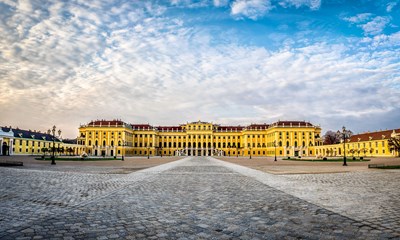
Schönbrunn Palace is a former imperial summer residence located in Vienna, Austria. Built in the 18th century, the palace features extensive formal gardens, a zoo, and numerous rooms furnished in the Rococo style. It served as the main summer residence for Habsburg monarchs and now functions as a museum and popular visitor site.
Schönbrunn Palace has over 1,400 rooms, making it one of the largest palaces in Europe.
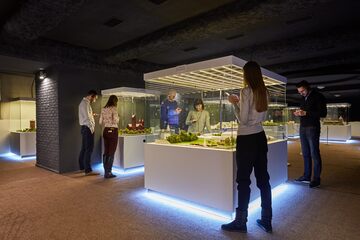
The Museum Strana Mini in Belarus offers visitors an engaging experience through its collection of intricately detailed miniatures representing the country's most iconic architectural and historical landmarks. Guests can explore a variety of exhibits that showcase the craftsmanship and history of Belarusian heritage, providing a unique perspective on the nation's cultural legacy. The museum also features interactive displays and guided tours, making it an educational and enjoyable destination for all ages.
At Museum Strana Mini in Minsk, visitors can explore intricately detailed miniatures of Belarus's landmarks.
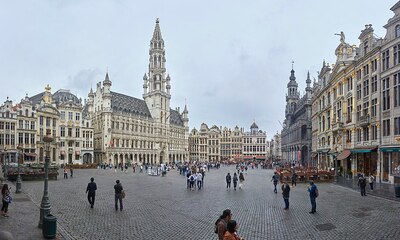
The Grand Place in Brussels, Belgium, is a stunning UNESCO World Heritage site renowned for its breathtaking architecture and rich history. This central square is surrounded by opulent guildhalls, the Town Hall, and the King's House, each showcasing intricate Gothic and Baroque designs. Visitors can explore the bustling market, enjoy a coffee at one of the charming cafes, or admire the ornate facades that light up beautifully at night. Regular events, such as the Flower Carpet and festive markets, add to the allure of this remarkable destination, making it a must-see for anyone visiting the city.
Every two years in August, Brussels' Grand Place transforms with a stunning 1,800-square-meter flower carpet.
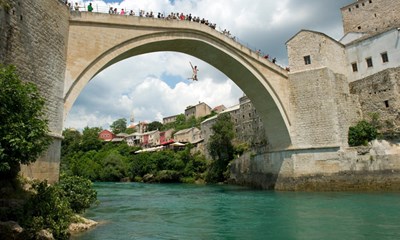
The Old Bridge in Mostar, Bosnia and Herzegovina, stands as a stunning example of Ottoman architecture and a symbol of resilience and unity. Spanning the Neretva River, this iconic structure draws visitors to explore its rich history and the picturesque old town surrounding it. Travelers can enjoy a leisurely walk across the bridge, visit the nearby Koski Mehmed Pasha Mosque for panoramic views, or delve into the region's past at the Museum of the Old Bridge. The area also offers opportunities to taste traditional Bosnian cuisine and watch the daring local divers plunge into the river below.
The Old Bridge in Mostar, a UNESCO site, hosts daring diving competitions from 24 meters high.
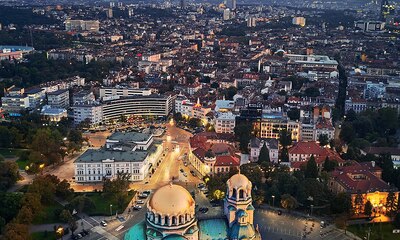
The Alexander Nevsky Cathedral in Sofia, Bulgaria, stands as a monumental example of Neo-Byzantine architecture and is one of the largest Eastern Orthodox cathedrals in the world. Visitors can explore its stunning interiors adorned with intricate mosaics and frescoes, admire the impressive golden domes from the outside, and learn about its historical significance at the crypt museum housing a vast collection of Orthodox icons. The cathedral's surrounding area offers a chance to enjoy local cafes, stroll through nearby parks, and experience the cultural richness of Sofia.
The Alexander Nevsky Cathedral's crypt houses a remarkable collection of Bulgarian Orthodox icons.
Dubrovnik, Croatia, offers a unique glimpse into medieval history with its well-preserved city walls and stunning Adriatic views. Visitors can stroll along the ancient fortifications, explore the historic Old Town with its charming limestone streets, and visit landmarks like the Rector's Palace and the Franciscan Monastery. For a different perspective, take a cable car ride to Mount Srđ for panoramic views, or relax at one of the nearby beaches. With its rich history and scenic beauty, Dubrovnik provides a memorable experience for all who visit.
Dubrovnik's ancient city walls stretch nearly 2 kilometers and offer stunning Adriatic Sea views.
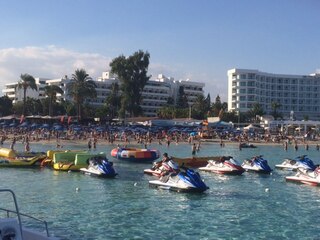
Nissi Beach in Cyprus offers a stunning destination for those seeking sun, sea, and sand. Known for its crystal-clear turquoise waters and soft white sands, it's a perfect spot for relaxation and recreation. Visitors can enjoy a variety of activities, from water sports like windsurfing and jet skiing to exploring nearby cafes and bars for a taste of local cuisine. As the sun sets, the beach transforms into a lively scene with music and entertainment, making it an ideal location for both daytime fun and evening excitement.
Nissi Beach's shallow, crystal-clear waters make it perfect for snorkeling and spotting vibrant marine life.
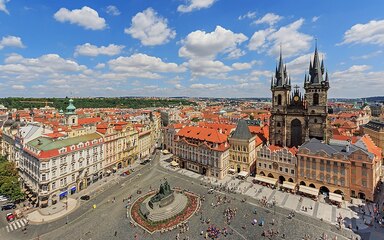
Old Town Square in Prague, Czech Republic, is a historic hub that offers a rich tapestry of architectural wonders and cultural experiences. Visitors can marvel at the intricate Astronomical Clock, explore the gothic beauty of the Church of Our Lady before Týn, and enjoy the lively atmosphere of street performers and local markets. With its blend of history and modern-day charm, the square also provides a perfect backdrop for dining at outdoor cafes and soaking in the unique ambiance of one of Europe's most picturesque settings.
Old Town Square's astronomical clock, installed in 1410, is the world's oldest still in operation.
Tivoli Gardens is an amusement park in central Copenhagen that combines traditional rides with landscaped gardens, restaurants, and performance venues. Opened in 1843, it features a mix of historic attractions such as a wooden roller coaster and newer rides including a Ferris wheel and thrill coasters. The park also hosts seasonal events, concerts, and light displays, and it serves as a public space used by both locals and visitors.
The oldest operating amusement park in the world, Tivoli Gardens opened its gates in 1843 in Copenhagen.
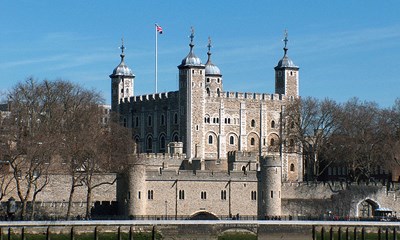
The Tower of London, a historic fortress situated on the banks of the River Thames, offers a fascinating glimpse into England's storied past. Visitors can explore the White Tower, marvel at the dazzling Crown Jewels, and learn about the infamous tales of imprisonment and execution. The Yeoman Warders, also known as Beefeaters, provide engaging tours filled with intriguing anecdotes, while the resident ravens add a touch of legend to this iconic landmark.
The Tower of London is home to a group of ravens, and according to legend, if the ravens ever leave, the tower will crumble and the kingdom will fall.
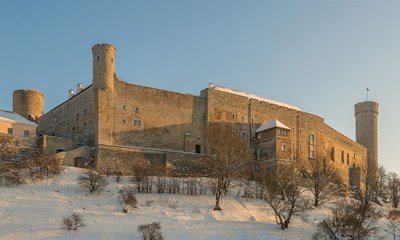
Tallinn, the charming capital of Estonia, awaits with its enchanting blend of medieval architecture, vibrant culture, and rich history. Nestled on the shores of the Baltic Sea, this hidden gem invites travelers to explore its cobblestone streets, visit its well-preserved Old Town, and immerse themselves in its fascinating museums and galleries. From admiring the towering spires of the Alexander Nevsky Cathedral to indulging in local delicacies at the bustling Balti Jaama Turg market, Tallinn promises a delightful journey filled with captivating experiences and unforgettable memories.
Tallinn's Old Town is one of the best-preserved medieval cities in Europe.
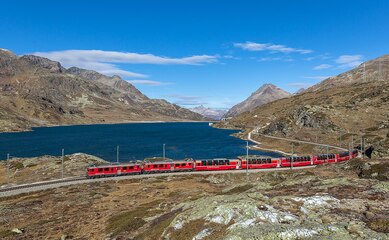
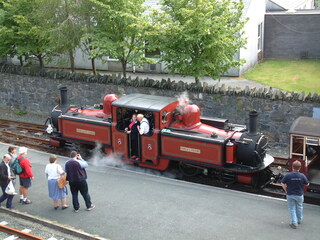
The Bernina Express runs on a narrow-gauge railway from Zermatt in the Swiss Alps to Tirano in northern Italy, covering 144 kilometers through the Bernina Pass at 2,253 meters. The route features 55 tunnels and 196 bridges, including the Landwasser Viaduct, and crosses glaciers, deep valleys, and Lago Bianco before descending via helical loops to the Poschiavo plain. Operating year-round with panoramic cars, it connects via the Glacier Express line and offers views of alpine scenery and engineering feats.
The Bernina Express is part of the UNESCO World Heritage-listed Rhaetian Railway, renowned for its engineering marvels.
Suomenlinna Maritime Fortress is a UNESCO World Heritage site located on a group of islands near Helsinki, Finland. Built in the 18th century by Sweden to defend against Russian expansion, the fortress consists of six islands connected by bridges and ferries, featuring preserved military architecture, museums, and coastal batteries. Visitors can explore the grounds on foot, visit historical exhibits, and observe the ongoing naval activities in the surrounding waters. The site also includes residential areas, restaurants, and cafes, making it a functional part of the local community.
Suomenlinna, a UNESCO World Heritage site, spans across six islands with stunning sea views.
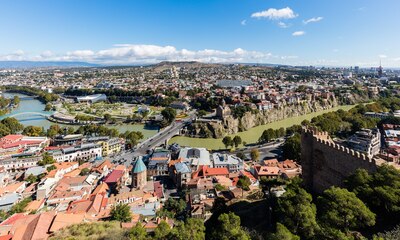
Old Tbilisi is the historic core of Georgia’s capital, where narrow streets wind between traditional wooden houses with carved balconies, sulfur bathhouses, and small churches. The area mixes surviving medieval structures with 19th-century buildings and Soviet-era additions, creating a compact urban landscape that reflects successive periods of the city’s development. Narrow lanes lead to the riverbank and up the hillsides, where visitors can see the Narikala fortress and scattered cupolas of Orthodox churches.
Narikala Fortress overlooks the city and offers wide views of the area.
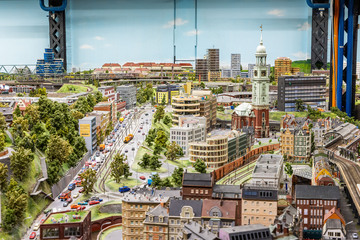
Miniatur Wunderland is a large-scale indoor model railway exhibition in Hamburg, Germany, featuring thousands of miniature figures, buildings, and landscapes spread across multiple themed sections. The exhibit includes detailed recreations of cities, airports, mountains, and coastlines, with moving trains, vehicles, and animated scenes that operate on automated schedules. Visitors can observe the models from multiple viewing levels and platforms, and the installation is regularly updated with new sections and technical features.
The Miniatur Wunderland holds the Guinness World Record for the largest model railway in the world.
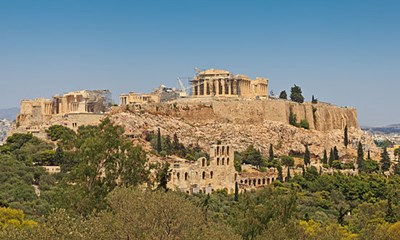
The Acropolis in Athens is an ancient fortified hilltop complex that includes several important structures from classical Greece, most notably the Parthenon. It served as a religious and civic center for centuries and contains temples, monuments, and artifacts that provide insight into ancient Greek architecture, religion, and political life. The site remains a key archaeological location and continues to be studied for its historical and cultural significance.
The Acropolis Museum features a glass floor, revealing ongoing archaeological excavations beneath your feet.
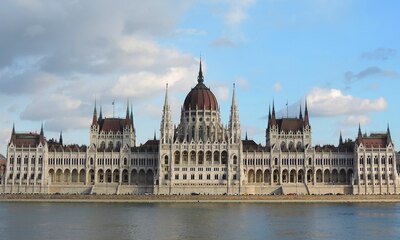
The Hungarian Parliament Building is a large Gothic Revival structure located on the eastern bank of the Danube River in Budapest. Completed in 1904, it serves as the seat of Hungary’s National Assembly and is one of the oldest legislative buildings in Europe still in use. The building features a symmetrical layout with a prominent central dome, extensive stonework, and numerous spires. It houses the Holy Crown of Hungary along with the upper and lower chambers used for parliamentary sessions. The structure is open to visitors for guided tours outside of active legislative periods.
The building contains 691 rooms connected by 20 km of corridors.
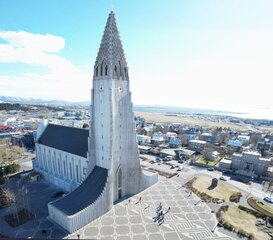
Hallgrimskirkja is a Lutheran church in Reykjavik, Iceland, designed by architect Guðjón Samúelsson and completed in 1986. Its exterior features a stepped concrete facade that rises to a height of 74.5 meters, making it the tallest building in the country. The interior includes a large pipe organ with 5,275 pipes, installed in 1992. The church offers an observation deck accessible by elevator that provides views of the city and surrounding landscape.
Hallgrímskirkja’s 74.5-metre tower offers panoramic views of Reykjavik’s rooftops and harbor.
Situated on the western coast of Ireland, the Cliffs of Moher offer a breathtaking natural spectacle that captivates travelers from around the world. With their towering heights and rugged beauty, these majestic cliffs provide an unforgettable experience for those seeking to immerse themselves in Ireland's stunning landscapes. From walking along the cliff edge to witness the awe-inspiring views of the Atlantic Ocean crashing against the rocks, to exploring the visitor center and learning about the rich history and geology of the area, there is no shortage of activities to indulge in. Whether you're a nature enthusiast, a photography enthusiast, or simply in search of tranquility, a visit to the Cliffs of Moher promises an unforgettable adventure in the heart of the Emerald Isle.
The Cliffs of Moher are home to over 20 species of nesting birds, including puffins.
The Colosseum is an ancient stone amphitheater in Rome, Italy, built in the first century AD. It was used for public spectacles including gladiatorial contests, animal hunts, and dramatic performances, and could hold tens of thousands of spectators. Today it stands as a partially ruined but largely intact structure and is one of Rome’s most visited historic sites.
The Colosseum in Italy is the largest amphitheater ever built and could hold up to 50,000 spectators.
The House of the Black Heads in Riga is a historic building originally constructed in the 14th century as a meeting place for an association of unmarried German merchants. The current structure is a reconstruction of the original building, which was destroyed during World War II. It features ornate Renaissance and Baroque architectural elements, including a prominent stepped gable facade decorated with sculptures and reliefs. Today the building serves as a venue for cultural events, exhibitions, and official receptions.
The House of the Blackheads facade was rebuilt in 1999 after wartime destruction.
Vaduz Castle, a striking symbol of Liechtenstein, serves as the official residence of the princely family and offers a captivating view over the capital city. Visitors can explore the surrounding areas, enjoying scenic hikes with panoramic vistas of the Rhine Valley and the majestic Alps. Although the castle itself is not open to the public, its presence enriches the cultural landscape, and the nearby Liechtenstein National Museum provides insights into the region's history and heritage. The picturesque surroundings invite leisurely walks, while the city of Vaduz offers charming cafes, art galleries, and boutique shopping experiences.
Vaduz Castle, home to the Prince of Liechtenstein, is not open to public tours.
Trakai Island Castle & History Museum in Lithuania is a captivating medieval fortress located on an island in Lake Galvė, offering visitors a unique experience of exploring Lithuania's rich history. This iconic 14th-century castle, once a stronghold of the Grand Duchy of Lithuania, now serves as a museum showcasing artifacts and exhibits that highlight the region's cultural heritage. Visitors can immerse themselves in the past by wandering through the castle's grand halls, admiring the stunning views of the surrounding lake, and participating in engaging events and festivals that bring history to life. Additionally, the area offers opportunities for leisurely boat rides, nature walks, and sampling traditional Karaim cuisine.
Trakai Island Castle, a 14th-century marvel, is uniquely situated on an island in Lake Galvė.
The Bock Casemates are a network of underground tunnels and fortified passages carved into the sandstone cliffs beneath Luxembourg City. Originally developed from medieval fortifications and later expanded by successive military powers, they served as defensive positions, storage areas, and troop shelters over several centuries. The tunnels stretch for several kilometers and include gun emplacements, staircases, and ventilation shafts that reflect different periods of construction and use. Today they are maintained as a historical site open to visitors who can walk through sections of the passages to see the scale and layout of the fortifications.
During WWII the tunnels sheltered thousands of civilians from air raids.
Mdina is a small, fortified city in the center of Malta that served as the island’s capital until the arrival of the Knights of Malta in the sixteenth century. Its narrow, stone-paved streets are lined with Baroque palaces and churches, many of which remain private residences, giving the town a quiet, lived-in character. The thick defensive walls and a wide moat separate it from the surrounding countryside, and several of the original gates still control access. Limited vehicle traffic keeps noise levels low, and most visitors explore on foot. A handful of museums and a cathedral occupy former aristocratic buildings, while cafés and small shops occupy ground-floor spaces along the main thoroughfare.
Mdina, known as the "Silent City," enforces a quiet atmosphere by limiting vehicle access within its walls.
Kotor Old Town is a compact, walled settlement at the end of a deep bay in Montenegro, with narrow stone streets, Venetian-era buildings, and a network of small squares. The town sits between steep limestone cliffs and the water, and its layout reflects centuries of trade and successive rulers. A number of churches, a cathedral, and a maritime museum are located inside the walls, and a steep path leads from the center to the hilltop fortress above. The surrounding bay is largely enclosed by mountains, which limits road access and keeps the scale of the town intact.
The town clock tower shows both Latin and Cyrillic time markings.
The Anne Frank House is a museum in central Amsterdam located in the building where Anne Frank and her family hid from Nazi persecution during World War II. Visitors can see the secret annex where the family lived for over two years, along with original furnishings, personal items, and Anne’s diary. The museum also presents historical context about the Holocaust and the persecution of Jews in the Netherlands through photographs, documents, and multimedia exhibits.
The Anne Frank House in Amsterdam, Netherlands, receives over 1 million visitors annually, making it one of the most visited museums in the world.
Mount Floyen is a 319-meter peak overlooking Bergen, Norway, and is reached by the Fløibanen funicular, a 1.3-kilometer line that climbs from the city center in about eight minutes. The funicular runs year-round with multiple departures each hour, carrying both residents and visitors to the summit station. At the top, a network of marked trails leads across the mountain plateau, while a café, souvenir shop, and viewing platforms provide basic amenities. The site is also the starting point for longer hikes into the surrounding hills.
Mount Fløyen summit sits 320 meters above Bergen city center.
The Eiffel Tower, an iconic symbol of Paris, stands as a testament to engineering prowess and architectural innovation. Completed in 1889 for the World's Fair, it was initially met with mixed reactions but has since become one of the most recognizable structures in the world. Rising 324 meters above the ground, the iron lattice tower offers panoramic views of the city and continues to attract millions of visitors each year, making it a central piece of Parisian heritage and a lasting emblem of French cultural identity.
The Eiffel Tower was originally intended to be a temporary structure and faced initial public criticism, but it went on to become one of the most iconic landmarks in the world.
Krakow’s Rynek Glowny is the historic central square of the city, dating back to the 13th century and measuring roughly 200 by 200 meters. It is surrounded by a continuous ring of multi-story buildings that house shops, cafes, and restaurants on the ground floor, with residential or office space above. The square contains several notable structures, including the Renaissance Cloth Hall (Sukiennice) at its center, St. Mary’s Basilica with its distinctive uneven towers on the eastern side, and the small Church of St. Adalbert near the southern edge. The open paved area is used for markets, seasonal events, and pedestrian circulation, with tram lines running along its perimeter.
Saint Mary's Basilica tower bugle call sounds every hour from 80 meters high.
Alfama is the oldest district of Lisbon, characterized by narrow, winding streets and steep stairways that connect its hillside neighborhoods. The area features traditional Portuguese architecture, including tiled facades and small squares, alongside landmarks such as the Lisbon Cathedral and the National Pantheon. It remains a residential zone with local shops, cafes, and viewpoints overlooking the Tagus River.
Listen to live Fado music in a traditional tavern, as Alfama is considered the birthplace of this melancholic Portuguese genre.
Peleș Castle, nestled in the Carpathian Mountains near Sinaia, Romania, is a striking example of Neo-Renaissance architecture. Constructed between 1873 and 1914, it served as a summer residence for the Romanian royal family. The castle is renowned for its elaborate woodwork, extensive art collections, and state-of-the-art innovations for its time, such as central heating and electricity. Surrounded by lush landscapes, Peleș Castle offers a glimpse into the opulent lifestyle of European royalty and stands as a testament to Romania's rich cultural heritage.
Peleș Castle, completed in 1883, was the first European castle fully powered by electricity.
Red Square is a large open plaza in central Moscow bordered by the Kremlin walls, Saint Basil’s Cathedral, the State Historical Museum, and the GUM department store. It has served as a marketplace, military parade ground, and public gathering space for centuries and remains a key site for official ceremonies and everyday pedestrian traffic.
The name "Red Square" derives from the old Slavic word for "beautiful," not its crimson color.
Centro Storico di San Marino is the historic core of the Republic of San Marino, a small enclave surrounded by Italy. The site features narrow cobblestone streets, stone buildings, and several fortified towers that overlook the surrounding countryside. It includes public squares, churches, and museums that document the city’s long history as an independent republic. The area is compact and largely pedestrian, making it easy to explore on foot.
The city walls date mainly to the 15th and 16th centuries.
The Real Mary King's Close is a preserved section of Edinburgh’s old town that lies beneath the modern Royal Mile. Once a densely populated residential area, the close was partially sealed off in the 18th century when new construction covered its upper levels. Today, guided tours lead visitors through its narrow, winding passages and into former homes and businesses, showing how people lived from the 16th to the 19th centuries. The site includes reconstructed rooms furnished with period objects and information on sanitation, trade, and outbreaks of plague that affected the city.
Mary King's Close was sealed off after the 1645 plague outbreak.
Bratislava Castle is a historic fortress overlooking the Danube River in Slovakia’s capital. The structure features four corner towers and a central courtyard, with origins tracing back to the 9th century and major reconstruction in the 20th century. It houses the National History Museum, displaying archaeological finds and period furnishings, and its terrace provides views of the city and surrounding landscape.
The castle's white walls were restored after a devastating fire in 1811 sparked by careless servants.
Lake Bled in Slovenia offers a picturesque retreat surrounded by stunning natural beauty. Visitors can take a traditional pletna boat to the charming Bled Island, explore the medieval Bled Castle perched on a cliff, or hike up to Mala Osojnica for panoramic views of the lake and Julian Alps. With opportunities for swimming, kayaking, and sampling the famous Bled cream cake, this destination promises a delightful mix of relaxation and adventure.
Lake Bled's island church houses the "Wishing Bell," which visitors ring for good luck.
The Sagrada Família is a large unfinished Roman Catholic basilica in Barcelona, Spain, designed by architect Antoni Gaudí. Construction began in 1882 and continues today under evolving plans that combine Gothic and Art Nouveau influences with Gaudí’s distinctive organic forms. The structure features eighteen towers, extensive sculptural façades depicting biblical scenes, and an interior defined by branching stone columns and colorful stained-glass windows. Visitors can observe ongoing work, climb selected towers for city views, and examine an on-site museum that documents the building’s design history and engineering.
La Sagrada Família, a famous basilica in Barcelona, has been under construction for over 138 years and is still not completed.
The Vasa Museum in Stockholm displays the Vasa, a 17th-century Swedish warship that sank on its maiden voyage in 1628 and was recovered intact in 1961. The museum presents the preserved ship along with artifacts recovered from the wreck, including clothing, tools, and personal items that provide information about daily life and naval practices during that period. Exhibits explain the ship's construction, the reasons for its sinking, and the conservation methods used to stabilize the wooden structure after recovery. The museum also includes models, films, and displays that outline Sweden's naval ambitions in the 1600s and the technical challenges of 17th-century shipbuilding.
The Vasa sank on its maiden voyage in 1628 due to being top-heavy with too many guns.
The Basilica Cistern is an underground water reservoir in Istanbul, Turkey, built in the sixth century during the reign of Emperor Justinian I. It consists of a large chamber supported by 336 marble columns arranged in 12 rows, with two of the columns featuring carved Medusa heads at their bases. Originally constructed to store and supply water to the Great Palace of Constantinople, the cistern was later rediscovered and restored in the modern era. Today it functions as a preserved historical site open to visitors.
The cistern holds about 80,000 cubic meters of water.
The Ukrainian Motherland Monument is a colossal stainless-steel statue standing 102 meters tall on the Pechersk Hills in Kyiv, completed in 1981 as the centerpiece of the National Museum of the History of Ukraine in the Second World War. It depicts a female figure holding a shield and an upraised sword, symbolizing the defense of the homeland during the Soviet era. The monument is accessible via an observation deck that offers panoramic views of the city and the Dnieper River, and its base houses exhibits related to wartime history.
It holds a 16-meter stainless-steel shield and 12-meter sword.
St Peter's Basilica is a Renaissance church located in Vatican City, designed primarily by architects including Donato Bramante, Michelangelo, and Carlo Maderno. Construction began in 1506 and was completed in 1626, replacing an earlier 4th-century basilica built over the traditional site of St Peter's tomb. The building measures approximately 211 meters in length and features a large central dome designed by Michelangelo that rises 136 meters above the floor. Inside are numerous works of art, papal tombs, and relics, along with the underground Vatican Grottoes containing the necropolis where St Peter is believed to be buried.
St. Peter's Basilica is the largest church in the world and is built on top of a burial site believed to be the tomb of Saint Peter, one of the twelve apostles of Jesus.
The Ffestiniog Railway is a narrow-gauge heritage line running through the mountains of north Wales between Porthmadog and Blaenau Ffestiniog. It follows the route of a former slate-haulage tramway, climbing steadily through wooded valleys and alongside lakes before reaching the old quarrying town. The journey takes roughly an hour each way and passes through several small stations where passengers can board or alight. Steam and diesel locomotives haul restored carriages, offering views of the surrounding Snowdonia landscape from open-sided or enclosed vehicles.
Steam locomotives haul trains through the Snowdonia National Park.
North America
The awe-inspiring beauty and vastness of the Grand Canyon make it a must-visit destination for any avid traveler. Located in Arizona, this natural wonder offers a myriad of activities and sights to explore. From hiking along the rim trails and capturing breathtaking views of the steep cliffs and deep gorges, to embarking on thrilling whitewater rafting adventures in the Colorado River, the Grand Canyon promises an unforgettable experience for nature enthusiasts and adventure seekers alike. With its rich geological history and mesmerizing landscapes, this iconic landmark is a testament to the Earth's incredible natural wonders.
Niagara Falls from the Canadian side offers a broad view of the three waterfalls that make up the Niagara system, with the Horseshoe Falls as the central feature. The location provides access to observation platforms, walking paths along the Niagara Parkway, and boat tours that approach the base of the falls. The area includes parks, viewpoints, and nearby attractions such as Clifton Hill and the Niagara Glen Nature Centre. Access is available by car, bus, or on foot from nearby hotels and parking facilities.
The Niagara Falls is not just one waterfall, but a collection of three waterfalls: the Horseshoe Falls, the American Falls, and the Bridal Veil Falls.
Xcaret is a large eco-archaeological park on Mexico’s Riviera Maya that combines restored Maya ruins, underground rivers, and a range of land- and water-based activities. Visitors can swim through a series of cenotes, watch traditional dance performances, observe native wildlife, and explore botanical gardens and a small museum. The site also includes restaurants, souvenir shops, and evening shows that highlight regional culture and history.
Xcaret covers 200 acres of jungle with underground rivers and cenotes.
Oceania
The Sydney Opera House is a performing arts centre located on a peninsula in Sydney Harbour, Australia. Designed by Danish architect Jørn Utzon and opened in 1973, the building is known for its distinctive white sail-shaped shells that form the roof structure. It houses multiple venues including a concert hall, opera theatre, and drama theatre, hosting a range of performances from opera and classical music to theatre and contemporary events. The site is also a popular location for visitors due to its position overlooking the harbour and proximity to the Sydney Harbour Bridge.
The Sydney Opera House is one of the most famous and distinctive buildings in the world, with its unique sail-like design and being recognized as a UNESCO World Heritage Site.
Sabeto Hot Springs and Mud Pool is a geothermal site located near Nadi, Fiji, where visitors can bathe in naturally heated mineral pools and apply mineral-rich mud to the skin. The area features a series of open-air pools with varying temperatures, as well as a mud bathing section where the clay is sourced from the surrounding volcanic soil. Access is typically managed through a small entry fee, and basic changing facilities and showers are available on site. The location is often visited as a half-day activity combined with nearby attractions.
The mud at Sabeto is rich in minerals believed to improve skin health.
Kiritimati Island, also known as Christmas Island, is an atoll in Kiribati located in the central Pacific Ocean. It is the world's largest coral atoll by land area, covering approximately 388 square kilometers. The island features a mix of lagoons, mangrove swamps, and limited terrestrial vegetation, with a population of around 7,000 residents primarily concentrated in several small villages. Kiritimati has historical significance as a site for British nuclear testing in the 1950s and 1960s, and it serves as an important location for seabird conservation and marine research.
Kiritimati is the world's largest coral atoll by land area.
Truk Lagoon is a sheltered body of water in Chuuk State, Micronesia, containing the wrecks of dozens of Japanese ships and aircraft sunk during Operation Hailstone in February 1944. The site is used by divers to examine largely intact WWII-era vessels and their cargoes resting at various depths.
Truk Lagoon contains over 60 shipwrecks from World War II.
Anibare Bay is a coastal inlet on the eastern side of Nauru, featuring a narrow sandy beach bordered by low cliffs and fringing reef. The site provides access to nearshore waters suitable for swimming and snorkeling, with basic facilities including parking and a small pavilion. The bay is also used locally for fishing and occasional community gatherings.
Anibare Bay has a 1.2 km sandy beach popular with locals.
Wai-O-Tapu Thermal Wonderland is a geothermal area in New Zealand’s Taupō Volcanic Zone featuring hot springs, boiling mud pools, steam vents, and mineral terraces. The site contains several named features including the Champagne Pool, Artist’s Palette, and Devil’s Home, where underground heat and mineral deposits create distinct colors and textures in the water and ground. Visitors can walk marked trails through the area to view these formations, with some sections emitting strong sulfur odors and high temperatures. The park operates as a paid attraction with designated paths and safety barriers around active geothermal features.
The Champagne Pool maintains a constant 74 °C surface temperature.
The Rock Islands Southern Lagoon in Palau is a UNESCO World Heritage site consisting of hundreds of forested limestone islands scattered across a protected marine area. The region features a network of marine lakes, coral reefs, and mangrove forests that support diverse marine and terrestrial species. Archaeological evidence indicates human occupation dating back thousands of years, including ancient village sites and rock art. The lagoon is also recognized for its role in preserving both natural ecosystems and cultural heritage within a relatively compact geographic area.
WWII shipwrecks lie underwater near several Rock Island locations.
Port Moresby Nature Park is a compact urban reserve that combines a botanical garden, small zoo, and walking trails. It features native plant collections, enclosures with local wildlife such as cassowaries, tree kangaroos, and crocodiles, and a modest network of paths that allow visitors to observe the species in a single visit. The park also includes basic visitor facilities like restrooms and shaded seating areas.
The park holds Papua New Guinea’s largest captive crocodile breeding program.
The Giant Clam Sanctuary in Samoa is a protected marine area focused on the conservation and study of giant clams, large bivalve mollusks native to the region. The site features shallow reef environments where various species of giant clams are maintained and monitored, providing opportunities to observe their natural growth patterns and ecological roles. Established to support local marine biodiversity, the sanctuary also contributes to research on reef health and sustainable resource management in Samoan waters.
Giant clams here can exceed 1 meter across and weigh over 200 kilograms.
Mataniko and Tenaru Falls are two waterfalls located near Honiara in the Solomon Islands. Mataniko Falls features a series of cascades that drop into a narrow gorge, with access involving a hike through jungle terrain and river crossings. Tenaru Falls consists of a single main drop surrounded by dense forest, reached by a walking track that follows the Tenaru River. Both sites are used for swimming and day trips from the capital.
These falls featured prominently in WWII battles around Guadalcanal during the Pacific campaign.
Mystery Island, also known as Inyeug, is a small, uninhabited island located just off the southern coast of Aneityum in Vanuatu. The island features a long stretch of white sand beach and is surrounded by clear waters that support coral reefs and marine life. It has a basic airstrip that accommodates small aircraft, and day visitors typically arrive by boat or plane from nearby islands. There are no permanent residents or facilities, so visitors usually bring their own supplies for picnics or short stays. The island is occasionally used for traditional ceremonies and remains largely undeveloped.
Mystery Island has no permanent residents and is visited only by day trips.
South America
Teatro Colón is a historic opera house in Buenos Aires, Argentina, that opened in 1908 and serves as the city’s primary venue for opera, ballet, and orchestral performances. It features a main auditorium seating about 2,500 people along with additional halls and rehearsal spaces. The building contains multiple levels of seating, extensive backstage facilities, and areas for set construction and costume production. It regularly hosts both local and international productions and maintains its own resident orchestra, chorus, and ballet company.
Teatro Colon in Buenos Aires is one of the top five opera houses in the world.
The vast and surreal landscape of Salar de Uyuni in Bolivia is a must-visit destination for any traveler. This otherworldly salt flat offers the opportunity to witness stunning sunsets and sunrises, explore the unique cactus island of Incahuasi, and take perspective-bending photos on the endless white expanse. Visitors can also marvel at the reflective surface after rainfall, creating a mirror effect that is truly mesmerizing.
Salar de Uyuni is the world's largest salt flat and home to unique pink flamingos.
Iguaçu National Park in Brazil offers visitors a chance to explore one of the world's most stunning natural wonders, the Iguaçu Falls, which stretch across a vast expanse of the park. Visitors can enjoy a variety of activities such as hiking the numerous trails, taking a boat ride to get up close to the roaring waterfalls, and observing the diverse wildlife, including toucans and capuchin monkeys. The park also provides opportunities for bird watching and photography, making it a must-visit destination for nature enthusiasts.
Iguaçu National Park is home to the world's largest waterfall system, with over 275 cascades.
Cerro San Cristóbal, a prominent hill in Santiago, Chile, offers a blend of natural beauty and recreational activities for visitors. Rising majestically above the city, it is part of the larger Metropolitan Park and provides panoramic views of Santiago and the Andes. Visitors can explore its lush trails, visit the iconic Virgin Mary statue at the summit, or ride the funicular railway for a scenic ascent. The hill also features the Chilean National Zoo and several picnic areas, making it a popular destination for both tourists and locals seeking leisure and outdoor adventure.
Cerro San Cristóbal offers panoramic views of Santiago and features a towering Virgin Mary statue.
Cartagena, a coastal gem on Colombia's Caribbean shoreline, offers a rich tapestry of history and culture. The city's walled Old Town, a UNESCO World Heritage site, invites exploration with its cobblestone streets, colonial architecture, and lively plazas. Visitors can enjoy a leisurely stroll along the city walls, soak up the sun on nearby beaches like Playa Blanca, or delve into the past at the imposing Castillo San Felipe de Barajas. With its bustling markets, vibrant nightlife, and delicious local cuisine, Cartagena provides a diverse array of experiences for travelers.
Cartagena's historic walled city, a UNESCO World Heritage site, offers vibrant architecture and lively street music.
Tortuga Bay Beach is a white-sand beach on Santa Cruz Island in the Galápagos, reached by a 45-minute walk from Puerto Ayora. It offers calm swimming waters and opportunities to see marine iguanas, sea lions, and birds.
Tortuga Bay is one of the few places in the world where you can swim with white-tip reef sharks.
Kaieteur National Park in Guyana protects a vast tract of rainforest centered on Kaieteur Falls, a single-drop waterfall roughly four times the height of Niagara. The park’s landscape combines sheer cliffs, deep gorges, and table-top mountains with lowland forest that supports giant river otters, Guianan cock-of-the-rock, and numerous endemic plant species. Access is limited to small aircraft and river travel, which keeps visitor numbers low and maintains the area’s remote character.
The park is home to the endemic Golden Poison Frog, one of the most toxic animals on Earth.
Paseo La Galeria is a shopping and entertainment complex in Asunción, Paraguay, that houses retail stores, restaurants, a cinema, and event spaces. The center includes both local and international brands along with dining options ranging from casual eateries to more formal restaurants. It serves as a common gathering place for residents and visitors seeking shopping, meals, or leisure activities in one location.
Paseo La Galeria is a shopping mall with stores, restaurants and a cinema.
Machu Picchu, located high in the Andes mountains of Peru, is a must-visit destination for any traveler seeking adventure and history. This ancient Incan citadel offers breathtaking views of the surrounding peaks, opportunities for hiking along the Inca Trail, and a chance to explore the intricate stone structures that have stood the test of time. Don't miss the chance to witness the sunrise over the ruins or to learn about the fascinating history of this UNESCO World Heritage Site.
Machu Picchu was rediscovered in 1911 by American explorer Hiram Bingham, who initially mistook it for the "Lost City of the Incas."
Port Market in Montevideo, Uruguay, is a historic portside building that has been converted into a food hall and market space. It houses a variety of vendors selling fresh seafood, meats, produce, and prepared dishes in a large, open hall with high ceilings and exposed brick. The market attracts both locals and visitors for casual meals and shopping, with seating areas available throughout. It operates primarily during daytime hours and is located near the city’s waterfront.
Port Market in Montevideo occupies a former customs building from 1860.
Angel Falls is the world's tallest uninterrupted waterfall, located in Canaima National Park in southeastern Venezuela. The falls drop 979 meters (3,212 feet) from the summit of Auyán-Tepui, a flat-topped sandstone mountain, into the Churún River below. Access to the site is limited and typically requires a multi-day expedition involving air travel to a remote airstrip, followed by motorized canoe travel and hiking through dense jungle terrain. The surrounding landscape consists of ancient tepui formations, savanna, and tropical forest within a UNESCO World Heritage site.
Angel Falls is the world's highest uninterrupted waterfall, dropping 3,212 feet from Auyán-tepui.
ALSO ON DAY ZERO...
Get inspired with these ideas for interesting and different experiences around the world.
Take your goal setting to the next level with a whole set of exclusive features that will empower you to achieve more.
more inspiration

Other Feature Lists worth a look.

Borrow ideas, steal goals, and keep the inspiration coming.


A practical, ever-growing collection of goals and habits to help reduce screen time and reconnect with the world offline.

Climb aboard for 40 of the world’s most spectacular rail adventures, each one turning miles of track into unforgettable panoramas of snow-capped peaks, sun-drenched coasts, and wild frontiers.

This collection highlights iconic, traditional, and beloved dishes from nearly every country, offering a guide to savoring the globe’s remarkable culinary diversity one authentic bite at a time.

Kickstart the year with intention and excitement by diving into this ultimate collection designed to fuel your personal growth and renewal.

Let the whisper of fresh snow inspire visions of epic descents across the US's finest resorts, from Alaska's wild frontiers to Vermont's wooded wonders.

Unlock your inner chef through the Ultimate Food List. These 80 bite-sized challenges are designed for kitchen enthusiasts eager to master techniques and savor the journey.

Explore our Top 100 Medieval Castles, a curated collection of iconic strongholds ready to inspire your next historic travel journey.

More than landmarks, these lighthouses shine as reminders to stay the course and seek new experiences to add to your life list.

Uncover Latin America’s treasures with these 50 UNESCO World Heritage Gems, where history and beauty collide.

Discover 45 unforgettable U.S. food festivals, from Cajun feasts to maple celebrations, perfect for every foodie’s bucket list.

Discover the ultimate ranking of the world's 50 best beaches for 2025, curated by the World’s 50 Best Beaches website and voted on by over 1,000 top travel influencers, journalists, and bloggers.

Embark on a global adventure with our definitive guide to every capital city, showcasing the vibrant hubs of culture, history, and travel.