EXPLORE    FEATURES   
EXPLORE    FEATURES     
Feature Lists

50 Must-Visit Wonders of India: Your Ultimate Travel Goal List
India is a tapestry of ancient wonders, vibrant cultures, and breathtaking landscapes that captivate every traveler’s imagination. From the timeless grandeur of the Taj Mahal to the serene beauty of Kashmir’s lakes and the wild majesty of its national parks, this ultimate list of 50 must-visit wonders is your essential guide to planning the trip of a lifetime.
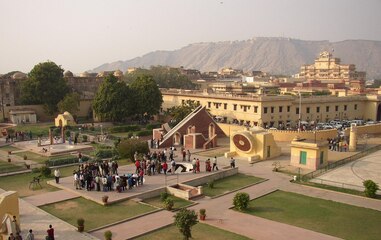
The Jantar Mantar is a collection of architectural astronomical instruments, built by Maharaja (King) Jai Singh II at his then new capital of Jaipur between 1727 and 1734. It is modeled after the one that he had built for him at the Mughal capital of Delhi. He had constructed a total of five such facilities at different locations, including the ones at Delhi and Jaipur. The Jaipur observatory is the largest and best preserved of these.
The Jantar Mantar was built by Maharaja Jai Singh II in 1734 as an astronomical observatory to study the heavens.
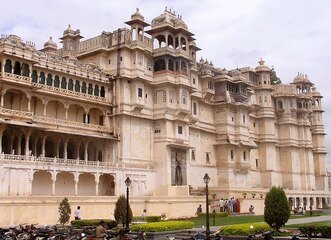
The City Palace in Udaipur is a large historic complex situated on the eastern shore of Lake Pichola. Built primarily in the 16th and 17th centuries, it served as the main residence and administrative center for the rulers of Mewar. The palace consists of multiple courtyards, halls, and terraces connected by narrow corridors and stairways. Its architecture combines elements from Rajput, Mughal, and European styles, visible in the carved stonework, mirrored interiors, and painted wall surfaces. Today, portions of the palace function as a museum displaying weapons, paintings, and royal artifacts, while other sections remain in private use.
The palace sits on a 400-year-old artificial lake created by Maharana Udai Singh II.
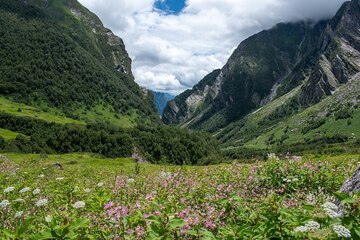
Valley of Flowers National Park occupies a high-altitude basin in Uttarakhand where summer snowmelt feeds dozens of small streams across meadows that support more than 500 recorded plant species. The terrain rises from birch forest into open slopes, allowing visitors to observe altitudinal plant zones within a single day’s walk. Footpaths remain narrow and largely unmarked, so navigation relies on visible ridgelines rather than signage.
The Valley of Flowers National Park boasts over 500 species of wildflowers, best seen July-August.
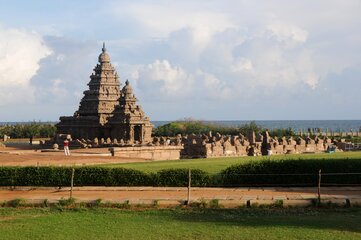
Mahabalipuram’s granite shore temples, carved from single boulders in the 7th–8th centuries, show how Pallava artisans removed stone in precise layers to create freestanding shrines and life-size animal figures still aligned with the original quarry floor.
The monuments were built by the Pallava dynasty in the 7th century, showcasing early Dravidian rock-cut architecture.
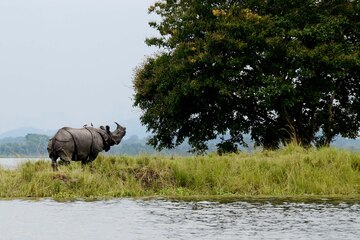
Kaziranga National Park in Assam, India, is a UNESCO World Heritage Site recognized primarily for its population of the Indian one-horned rhinoceros. The park spans riverine floodplains, tall grasslands, and patches of semi-evergreen forest, supporting a range of large mammals including tigers, elephants, and wild water buffalo. It serves as a critical habitat for migratory birds and several threatened species. The park’s landscape is shaped by seasonal flooding from the Brahmaputra River, which influences vegetation patterns and wildlife movement. Established in 1905 and later designated a national park, it remains a key site for conservation and ecological research in northeast India.
One-horned rhinos here number over 2,600, the world's largest population.
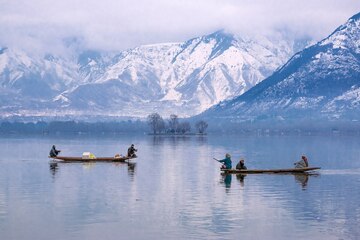
Dal Lake in Srinagar features houseboats that have served as floating residences for generations, allowing visitors to observe daily life along its interconnected waterways and markets.
Dal Lake is famous for its floating gardens called "Raad" that move with the wind.
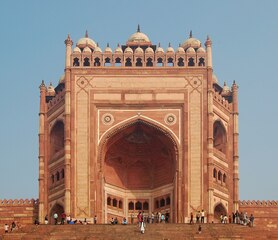
Fatehpur Sikri, situated about 40 kilometres west of Agra, was built in the late 16th century by the Mughal emperor Akbar as his short-lived capital. The sandstone complex includes the Jama Masjid, the Buland Darwaza, and the tomb of the Sufi saint Salim Chishti, along with palaces and administrative buildings arranged around open courtyards. Construction began around 1571 and the site was largely abandoned by 1585 when the court moved to Lahore. Today the well-preserved structures illustrate Mughal architectural planning, combining Persian, Indian, and Central Asian elements.
Akbar built the city in 1571 and abandoned it just 14 years later when the water ran out.
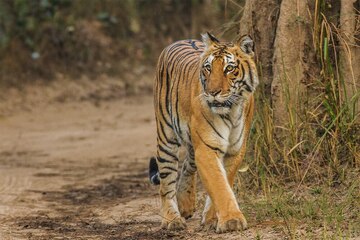
Gir National Park protects the last wild population of Asiatic lions, whose range once stretched across western Asia. Visitors can join guided drives at dawn or dusk, when the cats are most active, and observe them from open vehicles while forest staff track radio-collared individuals. The park also shelters leopards, sloth bears, and over 300 bird species, offering a compact window into a dry-deciduous ecosystem.
Gir is the last wild home of the Asiatic lion.
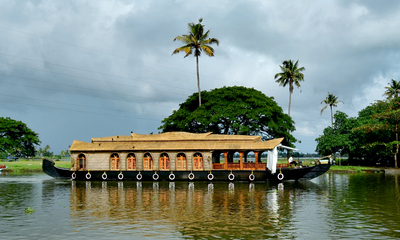
Houseboats in Alleppey travel along a network of canals and lagoons that connect villages, rice paddies, and coconut groves. Passengers can watch local fishermen cast nets, observe coir-making on the banks, and sample meals prepared with freshly harvested ingredients in the boat’s kitchen.
Alleppey’s houseboat tradition began in the 19th century when rice barges were converted for overnight guests.
ALSO ON DAY ZERO...
Get inspired with these ideas for interesting and different experiences around the world.
Take your goal setting to the next level with a whole set of exclusive features that will empower you to achieve more.
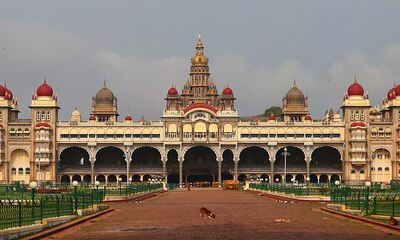
Mysore Palace, located in the city of Mysore in Karnataka, India, is a historical royal residence that stands as a significant example of Indo-Saracenic architecture. Built in the early 20th century, it was the official residence of the Wadiyar dynasty and remains a focal point of cultural heritage. The palace is renowned for its grand durbar hall, intricate carvings, and vibrant stained glass, reflecting a blend of Hindu, Muslim, Rajput, and Gothic styles. Visitors to the palace can explore its expansive grounds and appreciate its architectural beauty and historical significance within the region.
Mysore Palace's Durbar Hall features massive gold throne used by Wodeyar kings for ceremonies.
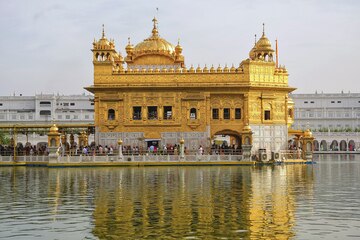
The Golden Temple, formally known as Harmandir Sahib, is a Sikh gurdwara located in Amritsar, Punjab. The central shrine sits in the middle of a large rectangular pool called the Sarovar, with its upper levels clad in gold leaf and white marble. Visitors walk around the complex on marble walkways, entering the main hall where the Guru Granth Sahib is read continuously. A free communal kitchen, or langar, serves meals to thousands of people each day regardless of background. The site also includes smaller shrines, a clock tower, and administrative buildings, and it remains open around the clock for worship and quiet reflection.
Its gold plating covers 500 kilograms of pure gold.
Located in the bustling city of Jaipur, the iconic Hawa Mahal is a must-visit destination for travelers looking to immerse themselves in the rich history and culture of India. This stunning architectural marvel, also known as the Palace of Winds, offers visitors the chance to explore its intricate facade, intricate lattice work, and panoramic views of the city. Additionally, guests can wander through the bustling markets of Jaipur, visit the nearby City Palace, or take a day trip to the majestic Amer Fort.
Hawa Mahal, also known as the Palace of Winds, is a five-story pink sandstone structure.
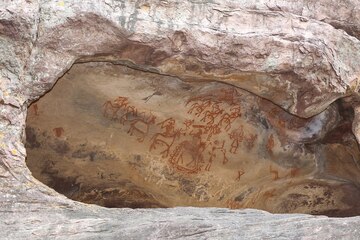
The Bhimbetka Rock Shelters, located in the foothills of the Vindhya Range in central India, comprise a series of natural rock formations that contain extensive evidence of prehistoric human activity. Archaeological excavations have uncovered stone tools, hearths, and other artifacts spanning from the Lower Paleolithic period through the Mesolithic era. The site is particularly notable for its rock paintings, which depict scenes of hunting, dancing, and daily life using mineral-based pigments. These paintings and the surrounding shelters provide insight into early human adaptation to the environment and the development of artistic expression over tens of thousands of years.
UNESCO recognized Bhimbetka as a World Heritage Site in 2003.
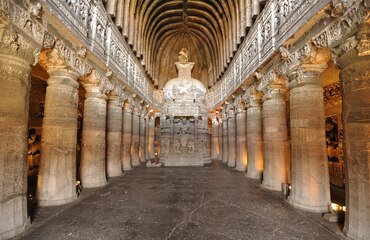
The Ajanta Caves, located in Maharashtra, India, are a collection of approximately 30 rock-cut Buddhist cave monuments dating from the 2nd century BCE to about 480 CE. These caves are renowned for their impressive architecture, intricate carvings, and detailed paintings that provide insight into ancient Buddhist monastic life and the art of the period. The site, nestled within a horseshoe-shaped cliff, offers a glimpse into the religious and cultural history of India, showcasing the evolution of Buddhist art and architecture over several centuries.
The Ajanta Caves are a UNESCO World Heritage site, dating back to the 2nd century BCE.
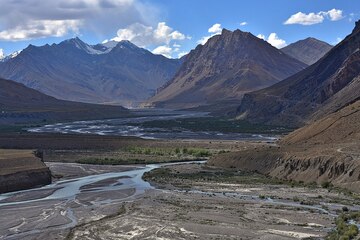
Spiti Valley sits above 3,000 metres in the rain-shadow of the Himalayas, where the Spiti River cuts a narrow gorge between bare rock walls and scattered villages. Travelers reach the valley by the partly paved Kaza–Manali highway, which crosses several high passes and offers views of monasteries such as Tabo and Key that date back more than a thousand years. The short summer window, usually June to September, limits access and keeps visitor numbers low.
Spiti was once a key route on the ancient Silk Road.
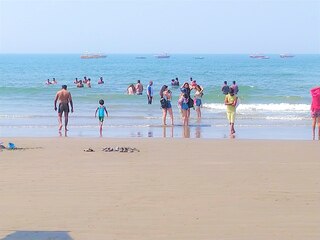
Goa’s beaches stretch along the western coast of India, offering a mix of sandy stretches backed by palm trees and a range of facilities from basic shacks to larger resorts. The northern beaches tend to be busier with more commercial activity, while the southern ones are generally quieter and less developed. Water conditions vary by season, with calmer seas during the winter months and rougher surf during the monsoon. Access is straightforward by road from the airport or nearby towns, and many beaches have lifeguards, changing areas, and nearby eateries.
Goa was a Portuguese colony for over 450 years until 1961.
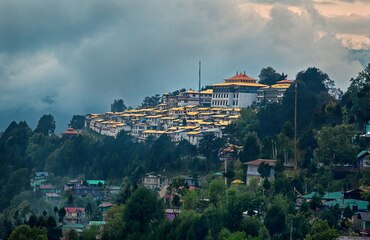
The Tawang Monastery, located in the mountainous region of Arunachal Pradesh, is one of the largest Buddhist monasteries in India. Established in the 17th century, it serves as a significant center for the Gelug school of Tibetan Buddhism and houses a substantial community of monks. The complex includes a main assembly hall, living quarters, a library containing ancient manuscripts, and a notable golden statue of Buddha. Visitors can observe daily monastic routines and explore the surrounding high-altitude landscape.
Founded in 1680, Tawang Monastery is the largest Buddhist monastery in India.
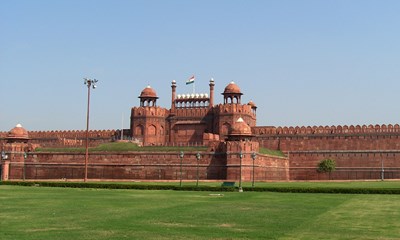
The Red Fort in Delhi, India, is a historic fortification that stands as a testament to the architectural brilliance of the Mughal era. Constructed in the mid-17th century by Emperor Shah Jahan, the fort is noted for its massive red sandstone walls and intricate design elements that reflect a blend of Persian, Timurid, and Indian architectural styles. Serving as the main residence of the Mughal emperors for nearly 200 years, it now houses several museums and is a symbol of India's rich history, attracting visitors interested in its cultural and historical significance.
The Red Fort was the main residence of Mughal emperors for nearly 200 years until the British took control in 1857.
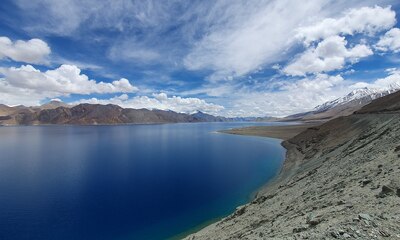
Pangong Lake is a high-altitude saltwater lake in the Ladakh region of India, situated at approximately 4,350 meters above sea level near the border with China. The lake stretches about 134 kilometers in length, though only a portion lies within Indian territory. Its water changes color throughout the day, shifting between shades of blue and turquoise depending on light and weather conditions. The surrounding landscape consists of barren mountains and sparse vegetation, with limited infrastructure and seasonal accessibility. The area experiences extreme temperature variations and is home to migratory birds during warmer months.
Part of the lake lies in disputed territory between India and China.
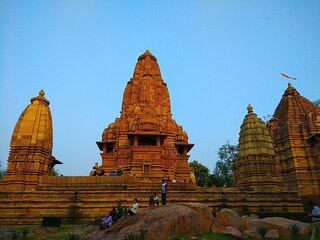
The Khajuraho Temples, located in the central Indian state of Madhya Pradesh, are renowned for their intricate sculptures and architectural brilliance. Built between the 9th and 11th centuries by the Chandela dynasty, these UNESCO World Heritage sites showcase a blend of Hindu and Jain religious art. The temples are particularly noted for their detailed erotic carvings, which illustrate a variety of human experiences and emotions, reflecting the society and culture of the time. With only about 20 of the original 85 structures surviving, the Khajuraho Temples continue to attract visitors for their historical significance and artistic merit.
Only 20 of the original 85 temples have survived, showcasing a mix of Hindu and Jain deities.
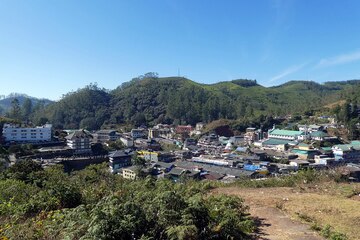
Munnar’s high-altitude tea estates consist of terraced slopes where Camellia sinensis is harvested year-round; visitors can walk between the rows and observe the selective hand-plucking of young leaves that later become orthodox black tea.
Munnar’s tea bushes were first planted by British colonists in the late 1800s.
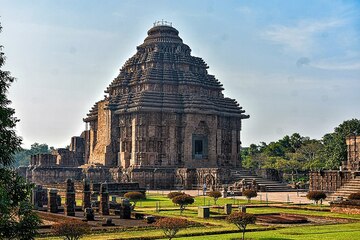
The Konark Sun Temple, located in the eastern Indian state of Odisha, is a remarkable example of ancient Indian architecture and craftsmanship. Built in the 13th century by King Narasimhadeva I of the Eastern Ganga dynasty, this UNESCO World Heritage Site is designed in the shape of a colossal chariot dedicated to the Sun God, Surya. The temple is adorned with intricate stone carvings that depict various aspects of life and mythology, showcasing the advanced artistic and engineering skills of the period. Despite the ravages of time, the Konark Sun Temple remains a significant cultural and historical landmark, drawing visitors interested in exploring India's rich heritage.
The Konark Sun Temple, built in the 13th century, is a UNESCO World Heritage Site.
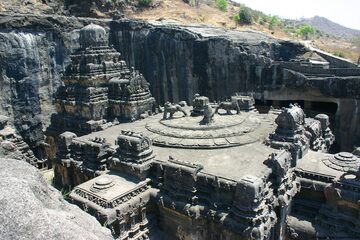
The Ellora Caves, located in Maharashtra, India, represent a remarkable fusion of religious art and architecture. Carved into the Charanandri Hills, this UNESCO World Heritage site comprises 34 rock-cut monasteries and temples that were built between the 6th and 9th centuries. These structures are significant for their representation of three major religions: Buddhism, Hinduism, and Jainism. Each cave showcases intricate carvings and sculptures that reflect the artistic and cultural developments of ancient India. The Ellora Caves stand as a testament to the religious harmony and architectural innovation of their time.
Ellora Caves feature 34 rock-cut temples spanning Hinduism, Buddhism, and Jainism from the 6th to 10th centuries.
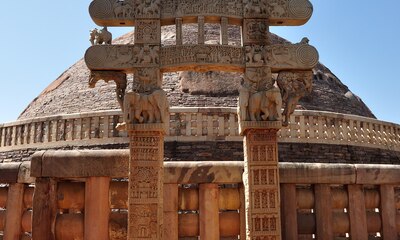
Sanchi Stupa is a large hemispherical brick structure in Madhya Pradesh, India, built in the third century BCE under the patronage of Emperor Ashoka. The monument consists of a central dome surrounded by a stone railing and four elaborately carved gateways that depict scenes from Buddhist narratives. It served as a reliquary for relics of the Buddha and as a focal point for early Buddhist monastic activity. The site also includes smaller stupas, temples, and monastic remains that span several centuries of construction and renovation.
Built in the 3rd century BCE, the Great Stupa is one of the oldest stone structures in India.
The Sundarbans National Park in India is a must-visit destination for nature enthusiasts and wildlife lovers. This UNESCO World Heritage Site offers a unique experience with its dense mangrove forests, breathtaking riverine landscapes, and diverse wildlife. Explore the park by taking a thrilling boat safari through its intricate network of waterways, witness the majestic Royal Bengal Tigers in their natural habitat, and marvel at the rich birdlife that calls this place home. Immerse yourself in the tranquility of this extraordinary ecosystem and create unforgettable memories amidst the beauty of the Sundarbans.
The Sundarbans National Park is home to the world's largest population of Bengal tigers.
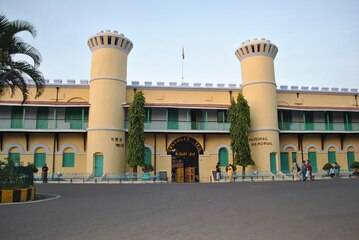
The Cellular Jail, located in Port Blair in the Andaman Islands, is a historic prison complex built by the British colonial government in the early 20th century. It was designed with a central tower and seven radiating wings of solitary cells, intended to isolate political prisoners and suppress dissent during the independence movement. The structure, constructed primarily from locally quarried stone, includes preserved cell blocks, an execution chamber, and a museum documenting the conditions and resistance of those imprisoned there. Today, the site serves as a national memorial and museum, with parts of the original complex remaining intact while other sections have been adapted for public access and commemoration.
Built in 1906 by the British, the jail housed Indian freedom fighters.
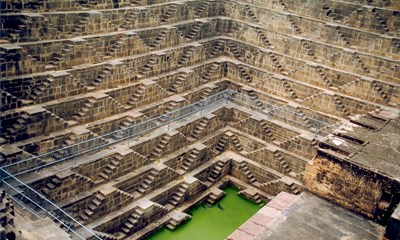
Chand Baori is a 13-level stepwell whose 3,500 narrow stone treads descend 30 meters into the ground, each level slightly offset to create a geometric pattern of light and shadow that shifts with the sun. The symmetrical layout and the absence of railings make the descent feel like walking through an open-air maze. The well’s depth also produces a noticeable drop in temperature, offering a measurable contrast to the surrounding plain.
Chand Baori was built in the 9th century and has 3,500 steps descending 13 stories.
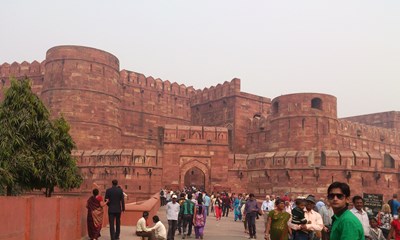
Agra Fort’s red sandstone ramparts enclose a sequence of courtyards and marble pavilions whose layout shows successive Mughal alterations from Akbar’s original military core to Shah Jahan’s later residential additions. Visitors can trace these changes by walking through the Jahangiri Mahal’s carved brackets and the Diwan-i-Khas’s inlaid pillars, each layer revealing shifts in function and decoration.
Agra Fort served as the main residence of Mughal emperors until 1638 when construction began on the nearby Taj Mahal.
The Taj Mahal in Agra, India, stands as a stunning testament to Mughal architecture and an enduring symbol of love. Built by Emperor Shah Jahan in memory of his wife Mumtaz Mahal, this iconic white marble mausoleum attracts millions of visitors each year. While exploring the Taj Mahal, you can marvel at its intricate carvings, walk through its lush gardens, and capture breathtaking photos of its reflection in the surrounding pools. Don't miss the chance to visit the nearby Agra Fort and the charming Mehtab Bagh for a different perspective of this architectural marvel.
You will not be alone! An estimated 7-8 million visitors each year make this India's top destination.
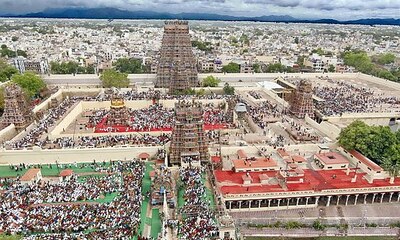
Meenakshi Temple, located in the ancient city of Madurai in Tamil Nadu, India, stands as a significant testament to Dravidian architecture and cultural heritage. Dedicated to Goddess Meenakshi and Lord Sundareswarar, this historic temple complex is renowned for its intricately carved gopurams, or gateway towers, and its vibrant sculptures depicting various deities, mythical figures, and scenes from Hindu mythology. With its roots tracing back to the 6th century, the temple has undergone numerous renovations, maintaining its status as a vital religious and cultural hub that attracts devotees and visitors from around the world.
The temple is dedicated to Goddess Meenakshi and her consort, Lord Sundareswarar.
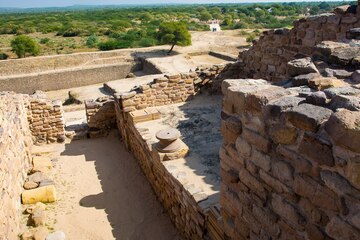
Dholavira’s grid-like street layout and large reservoirs carved from stone show how a Bronze-Age settlement managed scarce rainfall on arid Kutch. Visitors walk between excavated walls and wells that still retain traces of the original water channels, offering a direct view of ancient urban planning. The site’s museum displays seals and pottery recovered from the same layers, allowing comparison between the excavated structures and the artifacts they contained.
Dholavira was one of the five largest cities of the Indus Valley Civilization.
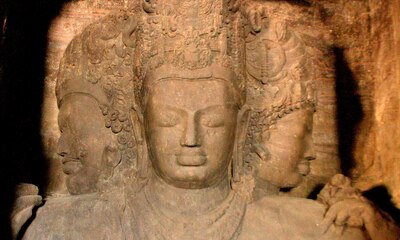
The Elephanta Caves are a collection of rock-cut Hindu temples and sculptures located on Elephanta Island in Mumbai Harbour. Carved from basalt rock between the 5th and 8th centuries CE, the site features a main cave with a central shrine dedicated to Shiva, surrounded by relief panels depicting episodes from Hindu mythology. The caves include large stone sculptures such as the Trimurti, a three-headed representation of Shiva, along with other figures and architectural elements typical of early medieval Indian temple design. The site is maintained by the Archaeological Survey of India and is accessible by ferry from Mumbai.
The Elephanta Caves were likely carved between the 5th and 8th centuries AD by Hindu devotees.
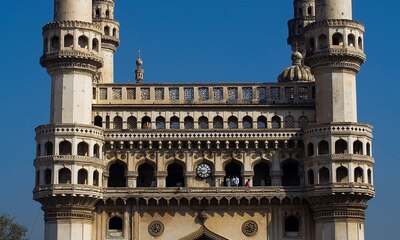
The Charminar, located in the heart of Hyderabad, India, is a historic monument and mosque that stands as a testament to the city's rich cultural heritage. Built in 1591 by Muhammad Quli Qutb Shah, the founder of Hyderabad, this iconic structure is renowned for its stunning Indo-Islamic architecture, featuring four grand arches and minarets that rise majestically into the sky. Surrounded by bustling markets and vibrant streets, the Charminar remains a focal point of local life, drawing visitors and residents alike to its storied past and architectural beauty.
Charminar, built in 1591, is a stunning example of Indo-Islamic architecture in Hyderabad.
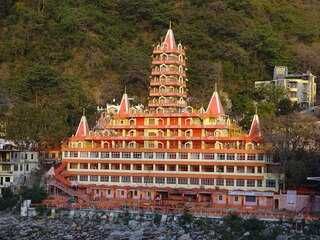
Rishikesh sits at the point where the Ganges leaves the Himalayas, so the river is still narrow, fast-moving, and cold. Visitors can walk across one of the two footbridges at dusk and watch the current carry offerings of marigolds and butter lamps. The ghats along the bank host daily gatherings where participants sit on stone steps while Sanskrit verses are recited through loudspeakers. Nearby ashrams offer daily classes in meditation and yoga that draw on texts composed in the region centuries ago.
Rishikesh is called the Yoga Capital of the World.
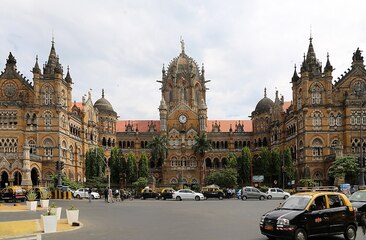
Chhatrapati Shivaji Terminus, located in Mumbai, India, is a historic railway station renowned for its architectural grandeur and significance. Designed by British architect Frederick William Stevens, the station opened in 1887 and showcases a blend of Victorian Gothic Revival and traditional Indian architectural styles. As a UNESCO World Heritage Site, it serves as a bustling hub for both local and long-distance trains, reflecting Mumbai's status as a major transit point in India. Its intricate stone carvings and impressive dome make it a landmark of both historical and functional importance in the city's landscape.
Chhatrapati Shivaji Terminus, a UNESCO World Heritage Site, showcases Victorian Gothic Revival architecture.
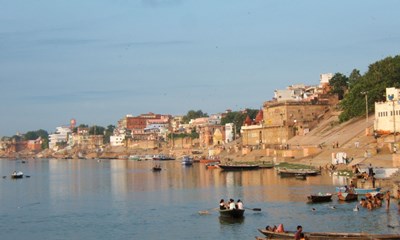
Varanasi's riverfront ghats consist of more than eighty stone steps and landings along the Ganges where residents and visitors perform daily bathing rituals, religious ceremonies, and cremations. The steps serve as public space for yoga, laundry, boat landings, and small markets, with narrow lanes leading back into the dense old city. Activity at the ghats follows a steady rhythm from early-morning rituals through evening lamps, while the continuous presence of funeral pyres at Manikarnika and Harishchandra ghats underscores the site's role in both life-cycle events and ordinary urban life.
Dashashwamedh Ghat, the oldest and most vibrant, is perfect for witnessing daily life unfold.
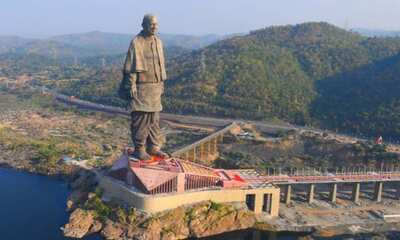
One of the must-visit destinations in Gujarat, India is the Statue of Unity. This colossal monument stands tall, representing the visionary leader Sardar Vallabhbhai Patel. Besides admiring the breathtaking statue, visitors can explore the museum showcasing Patel's life and legacy, enjoy a boat ride on the nearby river, and take in the panoramic views from the observation deck. Additionally, the site offers a variety of outdoor activities like hiking, cycling, and exploring the surrounding nature.
The Statue of Unity in Gujarat, India, is the world's tallest statue, standing at a towering height of 182 meters (597 feet).
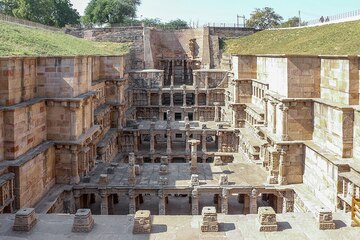
Rani Ki Vav, located in the town of Patan in Gujarat, India, is an intricately constructed stepwell that dates back to the 11th century. Built as a memorial by Queen Udayamati in honor of her husband, King Bhima I, this UNESCO World Heritage site showcases the architectural and artistic brilliance of the era. The stepwell is renowned for its detailed carvings and sculptures, which depict various deities, religious motifs, and secular themes, reflecting the rich cultural heritage of the region.
Rani Ki Vav, a UNESCO World Heritage site, is an intricately designed stepwell from the 11th century.
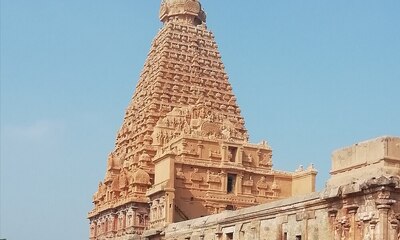
Brihadeeswarar Temple, located in Thanjavur, Tamil Nadu, is a monumental example of Dravidian architecture and a testament to the grandeur of the Chola dynasty. Constructed in the 11th century under the reign of Raja Raja Chola I, this UNESCO World Heritage site is renowned for its towering vimana, intricately carved sculptures, and the massive Nandi statue. As one of the largest temples in India, it continues to be a significant center for Hindu worship and a remarkable representation of ancient South Indian temple design and craftsmanship.
Frescoes on the walls depict Chola daily life and royal ceremonies from 1,000 years ago.
Amber Fort and Palace, located in Amer, Rajasthan, India, is an architectural marvel that reflects the rich history and craftsmanship of the region. Constructed in the late 16th century by Raja Man Singh, the fort is a blend of Hindu and Mughal architectural styles, featuring intricate carvings and expansive courtyards. Set on a hill overlooking Maota Lake, the fort's robust structure and ornate interiors, including the famed Sheesh Mahal or Mirror Palace, offer insight into the opulence and strategic significance of the Rajput rulers. Amber Fort remains a testament to the cultural heritage and historical legacy of Rajasthan.
The Amber Fort's Sheesh Mahal is renowned for its intricate mirror work and craftsmanship.
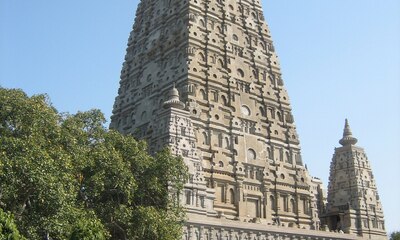
The Mahabodhi Temple is a major Buddhist pilgrimage site located in Bodh Gaya, Bihar, India. The complex centers on a tall brick tower built in the 5th–6th century CE and is believed to mark the spot where Siddhartha Gautama attained enlightenment under the Bodhi Tree. The temple grounds include the original tree’s descendant, stone railings from the Mauryan and Shunga periods, votive stupas, and several smaller shrines. The site is recognized as a UNESCO World Heritage property and continues to serve as an active place of worship and meditation for Buddhists from around the world.
The temple was designated a UNESCO World Heritage Site in 2002.
Gangtok sits at roughly 1,650 m on a ridge above the Ranikhola valley, with narrow streets that climb past markets selling local produce and Sikkimese handicrafts. From the city, a winding road reaches Tsomgo Lake at 3,800 m, where the water surface often reflects surrounding peaks and prayer flags mark small shrines on the shore. Winter snowfall can close the pass, so timing matters for road access.
Gangtok sits at 5,410 feet, making it India's highest state capital.
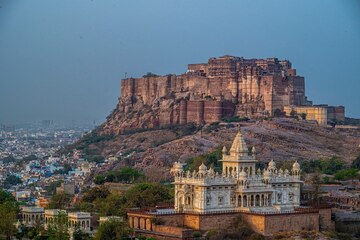
Mehrangarh Fort in Jodhpur is a large hilltop fortress built in the mid-15th century and expanded over several centuries. The structure includes thick sandstone walls, multiple gates, palaces, courtyards, and temples. It houses a museum with artifacts, paintings, and weapons from the ruling Rathore dynasty. The fort overlooks the city and surrounding plains and remains a well-preserved example of Rajput military architecture.
Mehrangarh Fort was built in 1459 by Rao Jodha, founder of Jodhpur.
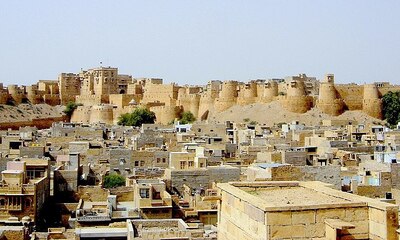
Jaisalmer Fort, located in the heart of the Thar Desert in Rajasthan, India, is a remarkable example of a living fort, where ancient history and modern life coexist. Built in 1156 AD by Rawal Jaisal, it stands as a testament to the architectural ingenuity of the time, with its massive yellow sandstone walls that blend seamlessly with the golden sands surrounding it. The fort houses a bustling community within its walls, including shops, homes, and temples, offering visitors a unique insight into the daily life and culture of the region.
Jaisalmer Fort, built in 1156, is one of the world's largest fully preserved forts.
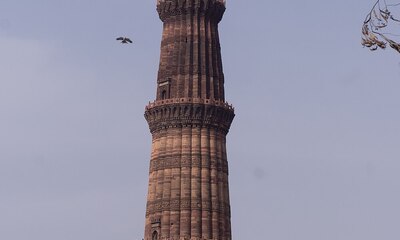
Qutub Minar, located in Delhi, India, is a towering minaret built in the early 13th century by Qutb-ud-din Aibak and later completed by his successors. Standing at a height of 73 meters, it is made of red sandstone and marble and is adorned with intricate carvings and verses from the Quran. The structure is a fine example of Indo-Islamic architecture and is part of the Qutub Complex, a UNESCO World Heritage Site, which also includes other historical monuments. The minar is not only a significant historical landmark but also a testament to the architectural ingenuity of the time.
Qutub Minar, a UNESCO World Heritage site, is the tallest brick minaret in the world.
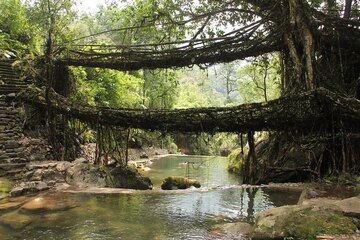
The Living Root Bridges in Meghalaya are aerial walkways formed by training the aerial roots of Ficus elastica trees across rivers and ravines. Local Khasi communities guide the roots over bamboo frameworks or along natural supports, allowing them to thicken and intertwine until they create stable, self-repairing structures that can span 30 meters or more. Construction typically takes 10–15 years, after which the bridges continue to grow and strengthen for decades or centuries. These engineered root systems serve as durable crossings in a region of heavy monsoon rainfall where wooden or steel alternatives would quickly deteriorate.
The living root bridges are grown by the Khasi and Jaintia tribes using the aerial roots of rubber fig trees.
Jim Corbett National Park, located in the foothills of the Himalayas in Uttarakhand, India, spans over 1,300 square kilometers of forested terrain and grasslands. Established in 1936 as India's first national park, it serves as a protected habitat for Bengal tigers, Asian elephants, sloth bears, and numerous bird species. The park includes varied ecosystems ranging from riverine areas to dense sal forests, with the Ramganga River running through its core. It supports ongoing wildlife conservation efforts and permits regulated tourism activities such as jeep safaris and nature walks.
Jim Corbett was the first national park established in India in 1936.
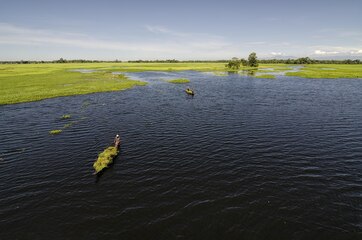
Majuli Island is a large riverine island formed by the Brahmaputra River in Assam, India. It is recognized as one of the world's largest river islands and serves as a center for Assamese neo-Vaishnavite culture, hosting several satras that preserve traditional dance, music, and mask-making practices. The island's landscape consists of wetlands, agricultural fields, and scattered villages, with seasonal flooding shaping both its geography and the livelihoods of its residents. Local communities rely on farming, fishing, and handloom weaving, while the island also supports diverse bird species and riverine ecosystems.
Majuli is the world's largest river island, formed by the Brahmaputra.
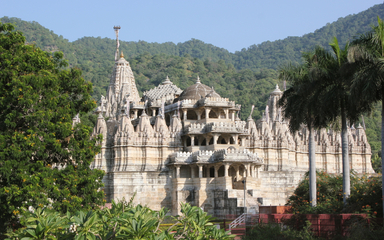
Ranakpur’s 15th-century Jain temple complex sits in a narrow Aravalli valley, its marble halls supported by more than fourteen hundred individually carved columns, none repeating the same motif. Morning light filters through latticed domes, revealing layered friezes of dancers, elephants, and deities that reward slow, repeated circuits on foot.
Built in the 15th century, the temple took 65 years to complete.
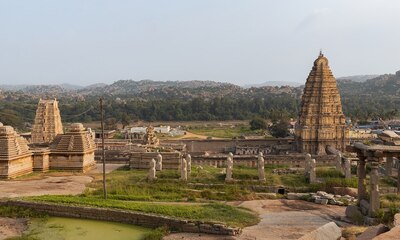
The Hampi ruins cover a wide plain of granite boulders and temple complexes built by the Vijayanagara rulers between the fourteenth and sixteenth centuries. Visitors can walk among pillared halls, stepped tanks, and carved reliefs that still show processions, deities, and daily life scenes. The open landscape allows clear views of how the city once integrated irrigation channels, markets, and fortifications into the rocky terrain.
Hampi was the capital of the Vijayanagara Empire, once one of the largest cities in the world.
ALSO ON DAY ZERO...
Get inspired with these ideas for interesting and different experiences around the world.
Take your goal setting to the next level with a whole set of exclusive features that will empower you to achieve more.
more inspiration

Other Feature Lists worth a look.

Borrow ideas, steal goals, and keep the inspiration coming.

Stars, Stripes & Symbols: 25 Icons of America to Experience in Person

Mark America's 250th anniversary by standing before 25 of the nation's most enduring icons — from the Liberty Bell to Mount Rushmore — and experiencing the story of the stars and stripes in person.

Watch fireworks over the National Mall on the Fourth of July

Every Country's Top Tourist Attraction - According to Tripadvisor

From iconic landmarks to hidden gems, these are the top attractions in every country according to millions of Tripadvisor reviews.

See the medieval walled city of Dubrovnik

Everyday Ways to Unplug and Rediscover Real Life

A practical, ever-growing collection of goals and habits to help reduce screen time and reconnect with the world offline.

Take one full day off all social media and streaming platforms every week

The 40 Most Scenic Train Journeys Worldwide

Climb aboard for 40 of the world’s most spectacular rail adventures, each one turning miles of track into unforgettable panoramas of snow-capped peaks, sun-drenched coasts, and wild frontiers.

Ride the TranzAlpine through New Zealand's Southern Alps

Exploring the World's Flavors: Signature Dishes to Discover

This collection highlights iconic, traditional, and beloved dishes from nearly every country, offering a guide to savoring the globe’s remarkable culinary diversity one authentic bite at a time.

Try tom yum goong in Thailand

Kickstart the Year: The Big List of Goals, Habits, and Fun Experiences for Growth

Kickstart the year with intention and excitement by diving into this ultimate collection designed to fuel your personal growth and renewal.

Establish a consistent sleep schedule

Conquer the Slopes: 40+ Iconic US Ski Destinations

Let the whisper of fresh snow inspire visions of epic descents across the US's finest resorts, from Alaska's wild frontiers to Vermont's wooded wonders.

Ski Heavenly Mountain Resort

The Ultimate Food List: 80 Essential Challenges for Kitchen Enthusiasts

Unlock your inner chef through the Ultimate Food List. These 80 bite-sized challenges are designed for kitchen enthusiasts eager to master techniques and savor the journey.

Cook a steak to perfect doneness

Top 100 Medieval Castles to Explore for a Journey Through History

Explore our Top 100 Medieval Castles, a curated collection of iconic strongholds ready to inspire your next historic travel journey.

Visit Eltz Castle (Burg Eltz)

Guiding Lights: 60 Spectacular Lighthouses Around the World

More than landmarks, these lighthouses shine as reminders to stay the course and seek new experiences to add to your life list.

Visit Pigeon Point Lighthouse

50 Must-See UNESCO Heritage Gems of Latin America

Uncover Latin America’s treasures with these 50 UNESCO World Heritage Gems, where history and beauty collide.

Visit Cartagena Old Town

45 Must-Visit Food Festivals Across the U.S. for Your Culinary Bucket List

Discover 45 unforgettable U.S. food festivals, from Cajun feasts to maple celebrations, perfect for every foodie’s bucket list.

Attend the National Fried Chicken Festival